To all those seeking, asking, and wondering about “Where are the signs of the end?”
Really?
First, from The Babylon Bee…
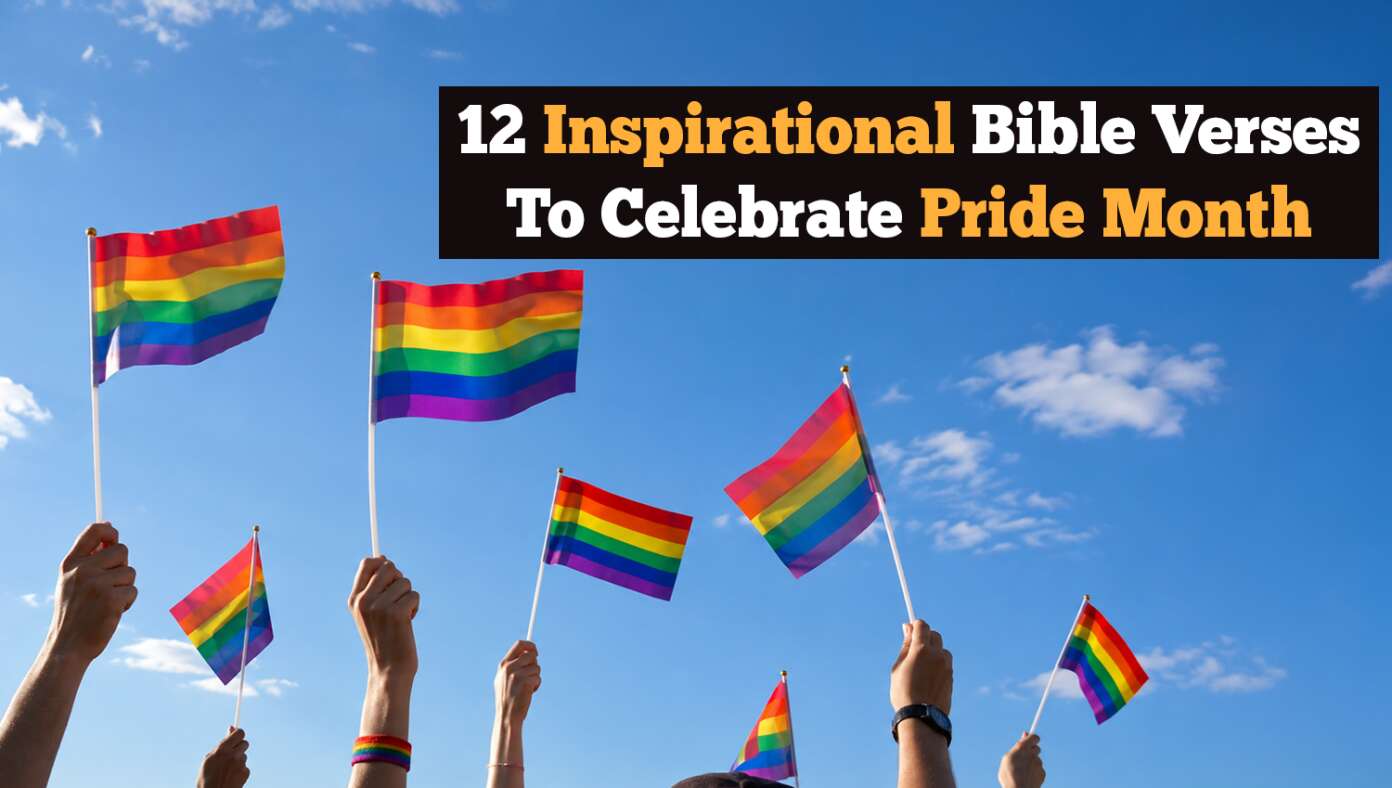
It’s Pride Month again, making this the perfect time of year to see what inspirational passages can be found in God’s Word that pertain to the subject.
Kick your pride up a notch and pass these comforting verses on to the homosexuals in your life:
- Genesis 19:24-25: “Then the Lord rained on Sodom and Gomorrah sulfur and fire from the Lord out of heaven. And he overthrew those cities, and all the valley, and all the inhabitants of the cities, and what grew on the ground.”
- Leviticus 18:22: “You shall not lie with a male as with a woman; it is an abomination.”
- Leviticus 20:13: “If a man lies with a male as with a woman, both of them have committed an abomination; they shall surely be put to death; their blood is upon them.”
- Job 35:12: “There they cry out, but he does not answer, because of the pride of evil men.”
- Proverbs 8:13: “The fear of the Lord is hatred of evil. Pride and arrogance and the way of evil and perverted speech I hate.”
- Proverbs 16:18: “Pride goes before destruction, and a haughty spirit before a fall.”
- Daniel 4:37: “Now I, Nebuchadnezzar, praise and extol and honor the King of heaven, for all his works are right and his ways are just; and those who walk in pride he is able to humble.”
- Romans 1:27: “and the men likewise gave up natural relations with women and were consumed with passion for one another, men committing shameless acts with men and receiving in themselves the due penalty for their error.”
- 1 Corinthians 6:9-10: “Or do you not know that the unrighteous will not inherit the kingdom of God? Do not be deceived: neither the sexually immoral, nor idolaters, nor adulterers, nor men who practice homosexuality, nor thieves, nor the greedy, nor drunkards, nor revilers, nor swindlers will inherit the kingdom of God.”
- James 4:6: “But he gives more grace. Therefore it says, ‘God opposes the proud but gives grace to the humble.'”
- Jude 1:7: “Just as Sodom and Gomorrah and the surrounding cities, which likewise indulged in sexual immorality and pursued unnatural desire, serve as an example by undergoing a punishment of eternal fire.”
- 1 John 2:16-17: “For all that is in the world — the desires of the flesh and the desires of the eyes and pride of life — is not from the Father but is from the world. And the world is passing away along with its desires, but whoever does the will of God abides forever.”
Be sure to hug a homosexual and share one of these inspiring verses today.
~~~ ~~~ ~~~
And from a very quick and easy search I made for just a few verses in God’s inerrant, infallible, unchangeable, eternal, living, and active Word about pride:
The Bible consistently warns against pride, emphasizing humility and reliance on God.
Key Verses on Pride
- Proverbs 16:18 – “Pride goes before destruction, a haughty spirit before a fall,” highlighting that pride often leads to downfall and misfortune.
- James 4:6 – “God opposes the proud but shows favor to the humble,” reminding believers that humility aligns with God’s grace.
- Proverbs 11:2 – “When pride comes, then comes disgrace, but with humility comes wisdom,” showing that wisdom is linked to humility.
- Proverbs 29:23 – “Pride brings a person low, but the lowly in spirit gain honor,” emphasizing the value of a humble heart.
- Psalm 10:4 – “In his pride, the wicked man does not seek him; in all his thoughts there is no room for God,” illustrating how pride can distance one from God.
- Daniel 4 – The story of King Nebuchadnezzar demonstrates that pride in accomplishments can lead to humbling by God.
- Matthew 23:12 – “Whoever exalts himself will be humbled, and whoever humbles himself will be exalted,” teaching the principle of divine reversal for the proud.
- Galatians 6:14 – “May I never boast except in the cross of our Lord Jesus Christ,” encouraging believers to place their pride in Christ rather than themselves.
- 1 Corinthians 1:31 – “Let the one who boasts boast in the Lord,” reinforcing that all achievements are blessings from God.
- Philippians 3:3 – “We put no confidence in the flesh, but boast in Christ Jesus,” emphasizing humility and reliance on God’s work in our lives.
RELATED: When The Call To Worship Becomes Blasphemous
Read on…
Ken Pullen, Tuesday, June 2nd, 2026
Pride Month Has Begun – Or Did It Ever End? The Rainbow That Never Comes Down
June 02, 2026
By PNW Staff
Reprinted from Prophecy News Watch
As June begins, a familiar ritual is unfolding across much of the Western world.
Corporate logos are being transformed into rainbow-colored versions of themselves. Social media feeds are filling with Pride Month messages. Government agencies, sports leagues, entertainment companies, major retailers, and countless public institutions are once again rolling out campaigns celebrating LGBTQ identities and causes.
For millions of Americans, it has become one of the most recognizable annual events on the cultural calendar. The rainbow banners appear. The themed advertising campaigns begin. Companies that sell everything from hamburgers to banking services suddenly become eager participants in conversations about sexuality and gender identity.
Americans are told that “Pride Month” has arrived and that celebration is expected. Yet a growing number of people are beginning to ask a simple question: Has Pride Month really begun–or has it ever actually ended?
For decades, Pride Month was presented as a single month dedicated to recognizing those who identify as LGBTQ. Today, however, the movement has expanded far beyond June. What was once marketed as a month-long observance has become a year-round cultural phenomenon.
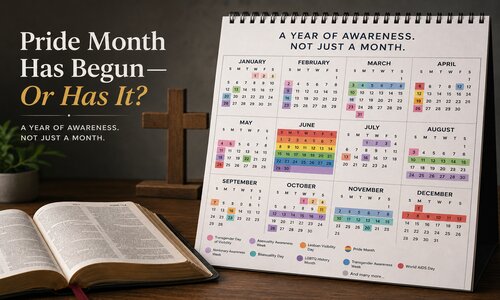
Advocacy organizations now recognize dozens of LGBTQ-related awareness days, weeks, and months throughout the calendar. International Transgender Day of Visibility is observed on March 31. International Asexuality Day follows on April 6. Lesbian Visibility Day takes place on April 26. Harvey Milk Day is celebrated on May 22. Pride Month occupies June. International Drag Day arrives in July. Celebrate Bisexuality Day is recognized in September. LGBTQ History Month fills October, along with National Coming Out Day and International Pronouns Day. November includes Transgender Awareness Week and Transgender Day of Remembrance. December begins with World AIDS Day.
The point is not to debate every date on the calendar. The point is that LGBTQ observances now stretch across much of the year. By some estimates, LGBTQ-related awareness campaigns, commemorations, and celebrations occupy nearly one-third of the calendar year.
Think about that for a moment.
One out of every three days is connected to some form of LGBTQ recognition, awareness, remembrance, or celebration.
Whether one supports or opposes the movement, it is difficult to argue that it suffers from a lack of visibility.
In fact, few groups in modern Western society receive more sustained institutional recognition than the LGBTQ movement. From corporations and universities to government agencies, sports leagues, entertainment companies, and media outlets, public affirmation has become a year-round reality rather than a month-long observance.
For many Christians, this raises an important question: When does awareness become promotion? When does tolerance become celebration? And when does celebration become ideological conformity?
The issue is not whether people should be treated with dignity and respect. Scripture teaches that every human being is made in the image of God and possesses inherent value. Christians are commanded to love their neighbors, even when profound disagreements exist.
The concern is that modern Pride celebrations increasingly demand more than tolerance. They demand affirmation.
There is a significant difference between allowing people to live according to their own choices and requiring society to celebrate those choices.
Historically, Pride events were presented primarily as civil rights demonstrations. Today, many Pride celebrations openly center around sexual identities, sexual behaviors, gender identities, and romantic preferences. Christians are left asking why sexual preference has become one of the most celebrated aspects of human identity.
Imagine if society devoted months of observances, awareness campaigns, corporate promotions, educational programs, and public celebrations to almost any other category of personal behavior. Most people would find it excessive. Yet when it comes to sexuality and gender identity, the cultural expectation appears to be endless affirmation.
The message is impossible to miss.
Corporate marketing campaigns. Public schools. Children’s programming. Professional sports leagues. Streaming platforms. Government agencies. Social media companies. Entertainment awards shows.
The celebration is not confined to June.
It is everywhere.
And for Christians attempting to raise children according to biblical convictions, that reality creates growing tension. Families increasingly find themselves navigating a culture that not only rejects biblical teachings regarding sexuality but actively seeks to replace them with an entirely different worldview.
Yet perhaps the most troubling development is not what is happening in Hollywood, corporate boardrooms, government agencies, or public schools.
It is what is happening in churches.
As June begins, numerous mainline Protestant denominations are once again preparing Pride Month worship services, Pride celebrations, Pride liturgies, and LGBTQ-themed church events. Denominations such as the United Church of Christ, the Evangelical Lutheran Church in America (ELCA), the Presbyterian Church (USA), the Christian Church (Disciples of Christ), the United Methodist Church, and The Episcopal Church have increasingly woven Pride Month observances into their annual church calendars.
Many congregations will display rainbow flags alongside crosses. Others will organize special Pride worship services, Pride-themed sermons, and public celebrations specifically affirming LGBTQ identities and relationships.
For supporters, these events are viewed as expressions of inclusion and acceptance.
For many Bible-believing Christians, however, they represent something far more serious: a reversal of the church’s historic mission.
The New Testament presents the church as a place where all sinners are welcomed but where no sinner is affirmed in sin. The Gospel invitation has always been accompanied by a call to repentance. Jesus welcomed tax collectors, adulterers, and outcasts, but His message consistently included the command to “repent and believe.”
The church’s role has never been to mirror the culture. Its role has been to proclaim truth to the culture–even when that truth is unpopular.
Yet increasingly, some denominations appear more interested in affirming contemporary sexual ideologies than proclaiming biblical teaching regarding sexuality, marriage, and holiness. What previous generations of Christians viewed as behaviors requiring repentance are now being celebrated from pulpits, incorporated into worship services, and elevated as expressions of spiritual faithfulness.
This raises a sobering question: If the church no longer calls people away from sin, what exactly is it calling them to?
Throughout history, the church has often faced pressure to conform to prevailing cultural values. The challenge facing Christians today is not entirely new. What is new is the speed and enthusiasm with which some churches have embraced ideas that directly conflict with thousands of years of Christian teaching.
A church that refuses to call sinners to repentance may attract cultural applause, but it risks abandoning the very message that gives people hope. The Gospel is not good news because it affirms us as we are. It is good news because Christ transforms us into what we were created to be.
Perhaps the most uncomfortable question surrounding Pride Month is one that advocates rarely address.
If unprecedented levels of visibility, affirmation, representation, and celebration are the answer, why do so many troubling statistics remain?
Despite extraordinary cultural support, studies continue to show elevated rates of depression, anxiety, self-harm, and suicidal ideation among those who identify as LGBTQ.
That reality should not be used to mock anyone’s pain. Every life matters. Every struggle deserves compassion.
But it does raise an important question.
If affirmation and celebration are the cure, why does the crisis persist?
Perhaps the answer lies deeper than politics, representation, or social approval.
Scripture teaches that every human being–regardless of race, background, orientation, identity, wealth, or status–shares the same fundamental problem: separation from God.
The deepest human need is not affirmation.
It is reconciliation.
The greatest crisis facing humanity is not a lack of visibility.
It is a lack of truth.
And the solution is not found in another awareness campaign, another corporate logo change, another month of celebration, or another cultural movement.
It is found in the Gospel of Jesus Christ.
This is why many Christians increasingly view Pride Month not as a simple call for tolerance, but as evidence of a culture searching desperately for meaning in identities that were never designed to carry the weight of human purpose.
The modern world tells people to look inward for fulfillment.
The Gospel tells people to look upward.
One says, “Celebrate yourself.”
The other says, “Deny yourself, take up your cross, and follow Christ.”
Those two messages are fundamentally incompatible.
As June begins, Christians should respond neither with fear nor hostility. They should respond with conviction, compassion, courage, and truth. They must refuse to compromise biblical teaching while remembering that every person they encounter is someone Christ died to save.
Because in the end, no amount of cultural celebration can heal what only the Creator can restore.
And that is something worth remembering–not just in June, but every day of the year.












Leave A Comment
You must be logged in to post a comment.