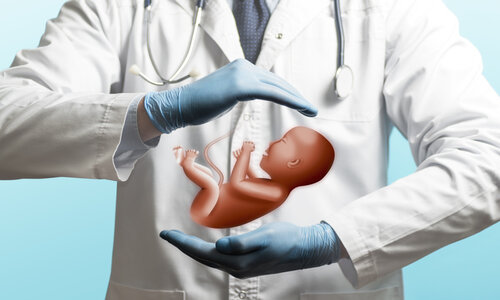
When Technology Redefines Family: Uncomfortable Truth’s About IVF & Surrogacy
January 16, 2026
By PNW Staff
Reprinted from Prophecy News Watch
In vitro fertilization and surrogacy are routinely celebrated as medical miracles–with some suggesting that science can now overcome biology, circumstance, and even time itself. For many, they represent hope. For others, freedom.
But as these technologies rapidly reshape how children come into the world, an uncomfortable question is emerging beneath the celebration: What happens to family, identity, and human dignity when reproduction becomes a transaction rather than a relationship?
IVF now accounts for roughly 100,000 births in the United States each year, nearly double what it was a decade ago. It has helped countless couples facing infertility. But it has also quietly transformed parenthood from something received into something engineered. Who gets to be a parent is no longer shaped primarily by marriage, permanence, or even partnership–but by access, money, and timing.
One of the clearest indicators of this shift is the rise of intentional single motherhood later in life. Government data shows that the number of unmarried women in their 40s having children has increased by more than 250 percent over the last three decades. Many of these women once hoped to raise children within a committed partnership. When that did not materialize, technology provided an alternative.
The question is not whether these mothers love their children. Many do deeply. The question is whether love alone can replace what has been intentionally removed. When fatherhood becomes optional by design rather than absent by tragedy, children inherit the consequences of adult decisions they never consented to.
The same logic now governs surrogacy–but at a far more disturbing scale.
What once involved rare, personal arrangements has become a global industry. Commercial surrogacy operates through clinics, contracts, and agencies that openly advertise six-figure “packages.” Some foreign buyers acquire American-born children not out of parental longing, but for legacy, prestige, or citizenship advantages. One recent case revealed a foreign executive who used U.S. surrogacy laws to acquire more than 100 children, openly favoring boys and viewing them as future assets.
This is not an outlier–it is the inevitable result of an unregulated market where babies are acquired through negotiation, genetic selection, and payment schedules. Agency websites emphasize how supported the surrogate will feel, how seamless the process is for “intended parents,” and how quickly matches can be made. The child, whose entire future hinges on these decisions, is often reduced to an afterthought.
Even more troubling are the new family configurations now pressing for legal recognition. Polyamorous groups seek shared parental status. Same-sex couples use surrogacy to bypass biological limits entirely. In at least one case, a male couple obtained an infant through surrogacy despite one partner being a registered sex offender–approved by a system more focused on adult eligibility than child protection.
All of this rests on a single cultural assumption: that adult desire defines moral legitimacy.
But children are not lifestyle accessories. They are not symbols of progress or fulfillment. They are people–formed in the womb, shaped by bonds that begin long before birth. Increasing research confirms what intuition has long suggested: profound biological and psychological connections form between a pregnant woman and the child she carries, regardless of genetics. Yet in many surrogacy arrangements, infants are removed immediately after birth and transferred–sometimes across borders–to people they have never known.
The irony is difficult to ignore. Animal breeders routinely require puppies to remain with their mothers for weeks to ensure proper development. Human infants are often afforded no such consideration.
None of this denies the pain of infertility or the sincerity of those longing for children. But there is a difference between healing what is broken and redesigning humanity itself. When reproduction is fully detached from sex, marriage, and permanence, children are no longer born into families–they are delivered into systems.
A society is ultimately judged not by how efficiently it fulfills adult desires, but by how fiercely it protects those who cannot speak for themselves. As IVF and surrogacy continue to expand without serious moral or cultural examination, the most vulnerable person in the process–the child–remains the least consulted.
Progress is not defined by what technology makes possible, but by whether wisdom keeps pace with power. And on this issue, wisdom is falling dangerously behind.












Leave A Comment
You must be logged in to post a comment.