Remarkable Resilience: A Brief History Of Christian Persecution In Iran
March 27, 2026
By AGENCY ICC / Press
Reprinted from Harbinger’s Daily
Christianity has existed in modern Iran for nearly 2,000 years. Long before the rise of Islam, Christian communities were already flourishing in the Persian Empire. Over centuries, these believers endured waves of suspicion, discrimination, and persecution. Yet despite political upheaval and government repression, Christianity has survived in Iran and continues today through both historic communities and a growing underground church.
For supporters of persecuted Christians worldwide, Iran represents both a story of suffering and one of remarkable resilience.
Christianity spread into Persia during the earliest centuries after the life of Jesus Christ. By the third century, organized Christian communities existed throughout the Persian Empire. These believers were associated with what later became known as the Church of the East, which played a significant role in the expansion of Christianity across Asia. In Christian history in Persia, missionaries traveled along trade routes such as the Silk Road, carrying the gospel into Central Asia, India, and even China.
Persian Christians became known for their deep understanding of their faith and their passion for sharing it with others. Yet, their political environment was often unstable because the Persian Empire frequently fought wars with the Roman Empire. The Roman Empire had adopted Christianity as its official religion in the fourth century. This led Persian rulers to sometimes view Christians with suspicion. This suspicion occasionally led to periods of persecution under the Sassanian dynasty. Despite these challenges, Christianity endured and remained a visible minority faith within Persian society.
The seventh-century Islamic conquest of Persia dramatically transformed the religious landscape of the region. As Islam gradually became the dominant religion, Christians were permitted to remain but were classified as “dhimmi,” meaning protected yet subordinate religious minorities. Under the dhimmi system, Christians were allowed to practice their faith but faced restrictions in public religious life and were required to pay a special tax. The dhimmi system was a legal arrangement that allowed non-Muslims to live under Islamic governance while accepting certain limitations.
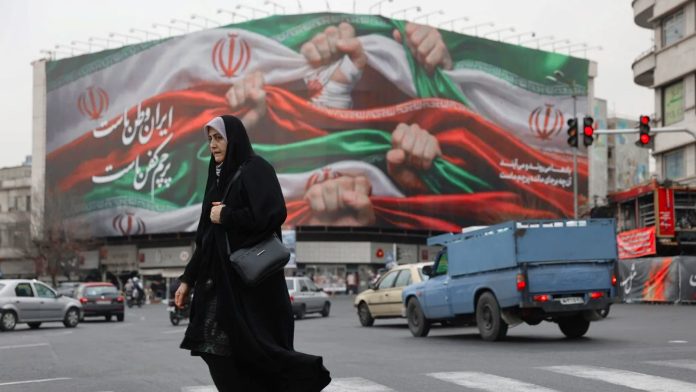
The modern phase of persecution against Christians in Iran intensified after the Islamic Revolution of 1979, which replaced the monarchy with an Islamic republic governed by clerical authorities. Under this system, Iran’s laws are heavily influenced by Islamic jurisprudence. While historic Christian communities, primarily Armenian and Assyrian churches, are officially recognized, conversion from Islam to Christianity is treated very differently. Reports from the U.S. Commission on International Religious Freedom (USCIRF) note that Iranian authorities frequently view conversion from Islam as a threat to the religious and political order of the state. Because of these restrictions, many Iranian Christians gather in underground house churches rather than official church buildings. Authorities regularly monitor house churches and raid gatherings of believers. Participants may face interrogation, imprisonment, or accusations of crimes such as “propaganda against the regime” or “acting against national security.”
Christian advocacy organizations continue to document these cases. For example, International Christian Concern (ICC) frequently reports on arrests and prison sentences targeting Iranian Christians involved in house church gatherings. One widely known case is that of Marziyeh Amirizadeh, an Iranian Christian who was imprisoned for distributing Bibles and sharing her faith. She spent 259 days in Tehran’s Evin Prison before international advocacy helped secure her release. Other believers have faced even more severe consequences. Iranian Christian convert Ghorban Tourani was murdered after refusing to abandon his faith.
Persecution in Iran extends beyond arrests and imprisonment. Christians may face discrimination in employment, education, and social life. Human rights organizations have documented restrictions on religious minorities in Iran and the pressure faced by converts. Authorities often monitor religious gatherings and prosecute individuals for peaceful religious activities. Despite these challenges, Christianity continues to spread quietly across Iran. Because official churches are restricted, many believers meet privately in homes to study Scripture and pray together.
Organizations document the expansion of Iran’s house church movement and the resilience of believers who continue to practice their faith despite government pressure. For many Iranian Christians, faith represents hope in a society marked by political repression and economic hardship. International advocacy has helped draw attention to religious freedom violations in Iran. In some cases, global pressure has helped secure the release of imprisoned believers or prevented harsher penalties.
The history of Christianity in Iran is ultimately a story of perseverance. For nearly 2,000 years, believers have navigated political change, social pressure, and government restrictions. Yet the Christian presence in Iran has never disappeared. For many Christians around the world, the courage of Iranian believers stands as a reminder that faith can endure even in the most difficult circumstances.










Leave A Comment
You must be logged in to post a comment.