Qatar, Turkey Try to Circumvent Hamas Disarmament as Terror Group Escalates Crackdown in Gaza
December 8, 2025
Reprinted from the algemeiner
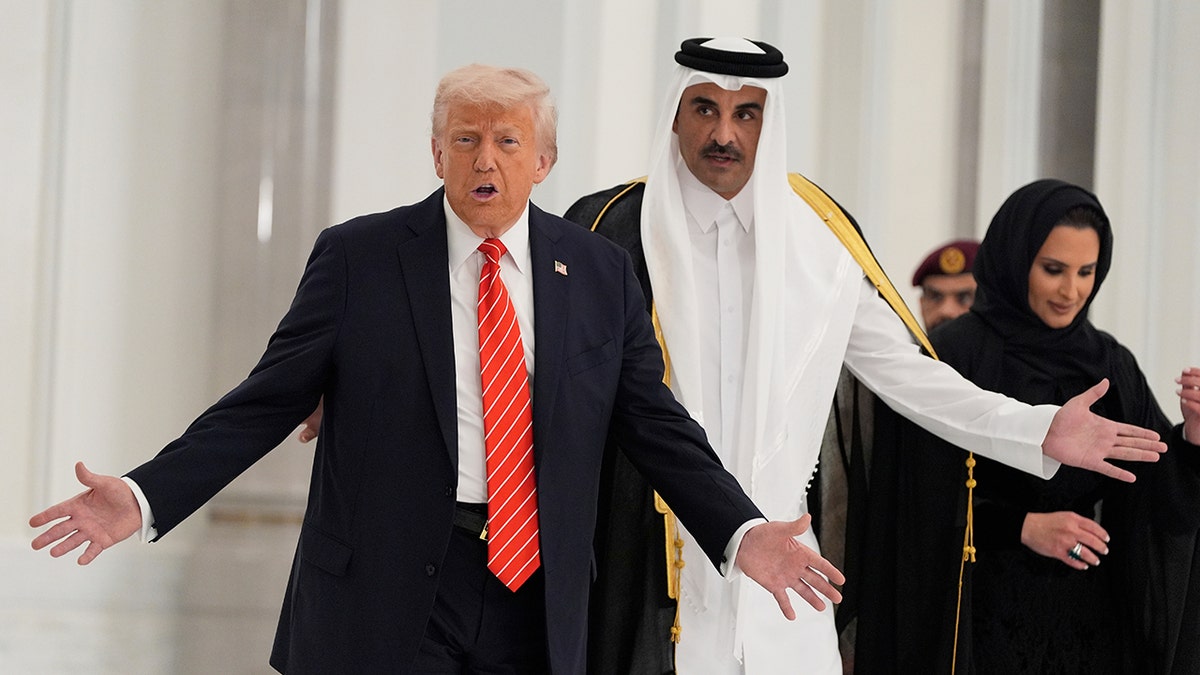
As the United States pushes for the second phase of President Donald Trump’s Gaza ceasefire to begin, Israel is warning that Qatar and Turkey are trying to shield Hamas from disarmament as the Palestinian terrorist group seeks to reassert control over the war-torn enclave.
Qatar and Turkey have proposed alternatives to a central provision of Trump’s peace plan, according to Israeli media reports. Rather than requiring Hamas to disarm, Qatari and Turkish officials have pushed for the Islamist group either to hand over its weapons to the Palestinian Authority or place them in secure storage under international oversight.
As part of this plan, Qatar and Turkey are reportedly advocating a two‑year grace period during which Hamas could legally retain its weapons.
However, Israeli officials have rejected these options as unacceptable, arguing they would allow the terrorist group to maintain its influence in Gaza, which Hamas has ruled for nearly two decades.
Israel has made clear it will allow Hamas just a few months to give up its weapons, warning it will act unilaterally if the group is not disarmed promptly.
Turkey and Qatar, both longtime backers of Hamas, have been trying to expand their roles in Gaza’s post-war reconstruction, which experts have warned could potentially strengthen Hamas’s terrorist infrastructure.
Israeli officials have repeatedly rejected any Turkish or Qatari involvement in post-war Gaza.
The first stage of Trump’s peace plan, which took effect in October, included Hamas releasing all the remaining hostages, both living and deceased, who were kidnapped by Hamas-led Palestinian terrorists during their Oct. 7, 2023, invasion of and massacre across southern Israel. In exchange, Israel released thousands of Palestinian prisoners and detainees, including many convicted terrorists serving life sentences, and partially withdrew its military forces in Gaza to a newly drawn “Yellow Line,” roughly dividing the enclave between east and west.
Currently, the Israeli military controls 53 percent of Gaza’s territory, and Hamas has moved to reestablish control over the other 47 percent. However, the vast majority of the Gazan population is located in the Hamas-controlled half, where the Islamist group has been imposing a brutal crackdown.
The second stage of the U.S. plan is supposed to install an interim administrative authority — a so-called “technocratic government” — deploy an International Stabilization Force — a multinational force meant to take over security in Gaza — and begin the demilitarization of Hamas.
As the international community works to implement phase two of the ceasefire deal, Qatar and Turkey are now insisting that Israel must withdraw from Gaza before Hamas can disarm — a demand Jerusalem vehemently opposes, warning it would give the terrorist group time to reassert full control over its half of Gaza and remove any incentive to disarm later on.
On Saturday, Qatari Prime Minister Mohammed bin Abdulrahman Al Thani said the international community has only achieved a “pause” in fighting, but not a full ceasefire, stressing that Israel would need to withdraw from the entire enclave to make it possible.
“A ceasefire cannot be completed unless there is a full withdrawal of the Israeli forces, there is stability back in Gaza [and] people can go in and out, which is not the case today,” Al Thani said during a press conference.
The Qatari leader also said that the mediating countries, including Turkey, Egypt, and the U.S., are “getting together in order to force the way forward for the next phase.”
However, Al Thani emphasized Qatar considers phase two to be “temporary,” arguing that addressing the immediate situation in Gaza alone is insufficient without tackling what he described as the underlying causes of the conflict.
“This conflict is not only about Gaza, but also the West Bank. It’s about the rights of the Palestinians for their state,” he said. “We are hoping that we can work together with the U.S. administration to achieve this vision.”
According to the ceasefire plan, the Israeli army is required to withdraw further as the disarmament process unfolds. However, Israel has made clear that it will not pull back until Hamas disarms and other conditions are met.
“We will not allow Hamas to reestablish itself. We have operational control over extensive parts of the Gaza Strip, and we will remain on those defense lines,” Lt. Gen. Eyal Zamir, chief of staff of the Israel Defense Forces (IDF), said on Sunday. “The Yellow Line is a new border line, serving as a forward defensive line for our communities and a line of operational activity.”
Meanwhile, Turkish Foreign Minister Hakan Fidan said a credible Palestinian civil administration and a vetted, trained police force should be established before Hamas can disarm.
In a press conference, Fidan emphasized that without these conditions, expecting Hamas to disarm is neither “realistic nor doable.”
However, Hamas continues to reject full disarmament, saying the group is only open to storing or freezing its weapons in order to preserve “the Palestinians’ ability to defend themselves.”
“Hamas is willing to discuss these ideas in the context of a ceasefire or long-term truce within a political process that will lead to the establishment of a Palestinian state,” senior Hamas official Basem Naim said in a statement.
In Gaza, Hamas’s brutal crackdown has continued to escalate dramatically as the terrorist group moves to reassert control over the enclave and consolidate its weakened position.
Following the death of Yasser Abu Shabab, the leader of an armed anti-Hamas Palestinian faction, last week, Hamas has given militants a 10-day ultimatum to surrender in exchange for promises of amnesty, according to Israel’s Channel 12 and reports on social media.
Abu Shabab, a Bedouin tribal leader based in Israeli-held Rafah in southern Gaza, had led one of the most prominent of several small anti-Hamas groups that emerged in the enclave during the war that began more than two years ago.
He died last week while mediating an internal dispute between families and groups within the militia, dealing a setback to Israeli efforts to support Gazan clans against the ruling Islamist group.
Since the ceasefire took effect two months ago, Hamas has targeted Palestinians who it labeled as “lawbreakers and collaborators with Israel,” sparking widespread clashes and violence as the group moves to seize weapons and eliminate any opposition.
Social media videos widely circulated online show Hamas members brutally beating Palestinians and carrying out public executions of alleged collaborators and rival militia members.
RELATED:
Ted Cruz Blasts Tucker Carlson for Plan to Buy Home in Qatar, Conduct at Doha Forum | Algemeiner.com










Leave A Comment
You must be logged in to post a comment.