One Generation Away: A Nation’s Convictions Are Not Automatically Imparted, They Must Be Taught
April 6, 2026
By Mark Henry
Reprinted from Harbinger’s Daily
“Freedom is never more than one generation away from extinction. We didn’t pass it to our children in the bloodstream. It must be fought for, protected, and handed on for them to do the same, or one day we will spend our sunset years telling our children and our children’s children what it was once like in the United States where men were free.”
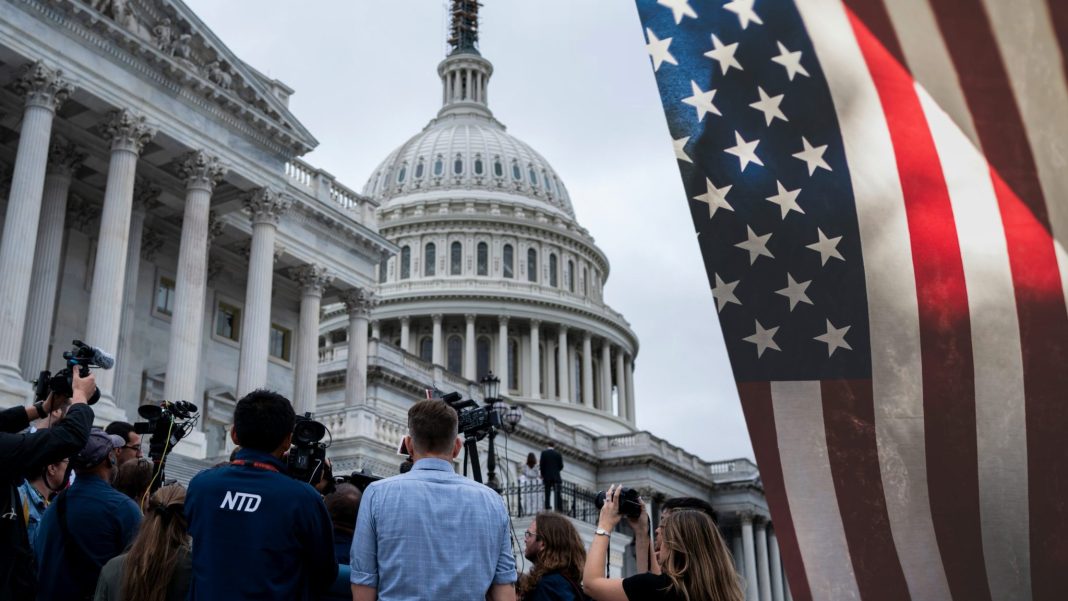
These prudent words from former US President Ronald Regan could not be more relevant to the current social, political, and cultural environment here in our country.
What President Regan so wisely understood is that a nation’s beliefs, morals, and values are directly influenced and shaped by the ideologies and doctrines of the institutions that instruct and condition the intellect and reasoning of its citizens. Personal convictions and sentiments about that which one deems important don’t happen by chance and they aren’t automatically imparted from one generation to the next. They are taught.
How Worldviews are Formed and Passed to the Next Generation
Whether it is through familial structures, academic institutions, religious associations, or the myriad streams of content dissemination through media, information is continuously imparted that either affirms or challenges one’s preexisting mindset. In so doing, the traditions, principles, and customs of one population are adopted, altered, or abandoned by the succeeding population. Over the course of time, as ideas are embraced or rejected, one’s perception of such topics develops and matures into a worldview from which decisions are made and actions are executed.
America’s Cultural and Christian Foundations
Again, one of the very important truths that Regan recognized is that at a macro-level the cultural values and ethos of a nation ought to be viewed as a beloved asset, a cherished treasure, worth defending because when they’re not, they’ll inevitably be lost, forgotten, stolen, or destroyed as quickly as a vapor disappears into the air.
This not only applies with regards to national identity where, as Americans, we uphold life, liberty, and the pursuit of happiness, but especially applies to our Christian identity which affirms continual dependence on God’s grace through faith in His One and only Son, Jesus, guided by His written Word, and empowered by His Holy Spirit in all areas of life (Ep. 2:8-9, Jn. 14:6, 2 Ti. 3:16-17, Ga. 5:22-23).
It’s the very ideals such as these that define a people nationally, politically, culturally, and ethically. They are the woven threads expressing that which unites a people in their shared virtues, ultimately resulting in a singular homogenous fabric, mutually strengthened by one another. The fathers of this great American nation understood this as did subsequent generations of Americans who came before us.
Tragically, we are now witnessing the deliberate attempt to unravel the threads of our national American identity and Christian heritage through the proliferation of unbiblical philosophies and demonic doctrines contrary to those esteemed in our nation for centuries. Over the past several decades the countercultural seeds of what is known as “critical theory” have been quietly and methodically sown into the same societal structures and institutions previously mentioned yet are now manifesting themselves in innumerable ways like invasive weeds that threaten to destroy a fruitful garden.
Understanding Critical Theory and Its Origins
What exactly is critical theory and why is it so dangerous? Critical theory is a system of thinking borne out of Marxist philosophy from the early 20th century which aims to critique, challenge, and change various structures within a populace, having the goal of complete societal transformation. It focuses on established systems and structures of power within a people group, dividing them into two broad categories, those that are dominant who have power, and those who are oppressed and lack power. This framework can then be applied to countless elements within a community such as ethnicity, class, gender, sexuality, religion, environment, and more.
Regardless of the field, the process and objective remain the same; the origins from where societal structures derive their power are examined, factors leading to perceived inequality or injustice are scrutinized, leading to the inevitable conclusion that they must be replaced. By design, it is a recipe for rebellion, revolt, and revolution.
The Influence of Critical Theory in Modern Institutions
Once understood, it is plain for those with eyes to see that critical theory has become embedded into virtually every area of American life today, prompting an identity crisis on a national scale. This great country that had once been unified by its common acceptance of shared principles and values shaped by Biblical virtues has been and continues to be under relentless attack as the historical roots, traditional beliefs, and accepted norms are denigrated and deconstructed by those who have fallen prey to the deceptively alluring rhetoric of critical theory.
Where there had once been a shared feeling of national pride and collective ethos rooted in a rich cultural heritage, there is now a growing cacophony of voices claiming victimization perpetrated at the hands of those having white skin, those asserting the existence of only two genders, that one’s sex is immutable, that capitalism is the greatest opportunity for prosperity, and those guided by traditional Biblical Christian doctrine.
As individuals become indoctrinated into embracing the tenets of critical theory, the natural response is an increased sense of dissatisfaction with and feeling dominated by the status quo, necessitating a need for change. This, in turn, leads to action and activism.
Lamentably, this has become readily apparent as the fruit of critical theory is demonstrated with increasing frequency by crowds of hostile protesters in cities across the land, decrying things like immigration enforcement, American involvement in geopolitical conflicts, and gun violence. One should not expect to see public demonstrations or social activism decline anytime soon as recruitment efforts for new proponents of the Marxist and socialist concepts inherent in critical theory are no longer limited to the arena of scholastic institutions of higher learning.
The ideological teachings of critical theory have begun to permeate into lower levels of the American educational system under the guise of “social emotional learning” which can easily serve as a vehicle for the introduction of progressive agendas conflicting with Biblical teaching, including but not limited to: fluid gender identities, questioning of parental authority, and normalization of sexuality beyond God’s design stated in His Word.
It doesn’t take much to see how children can easily be persuaded to view themselves as victims of oppression by persons of authority, such as parents or church leaders, who are unwilling to affirm teachings that don’t align with Scripture. By introducing “progressive” philosophies to impressionable young minds at an early age, the likelihood that they’ll be adopted and accepted is increased. In due time, as those same teachings become more ingrained, they develop into core beliefs that shape one’s worldview, which in turn may then be defended and disseminated as children mature into adulthood.
This tactic is nothing new. Quite the opposite; it’s a useful strategy that has been employed by numerous dictators throughout history. Among recent examples are the Hitler Youth in Nazi Germany, the Red Guard in Communist China under Mao Zedong, and the Komsomol in the Stalinist Soviet Union, which all drew upon Marxist teachings to advance their revolutionary agendas.
They knew if young minds could be shaped early, within a short period of time, they’d have a new generation of followers who are loyal to their socialist, communist, and fascist causes. These examples from history should serve as a sobering warning about what is now taking place right here in America.
The Growing Consequences for Faith, Freedom, and the Church
For those tempted to simply dismiss this as hyper alarmism or consider it an inconsequential departure from the church’s central mission of fulfilling the Great Commission (Mt. 28:19), I would caution you to reconsider, as ignoring this issue will prove to be an egregious mistake.
Christians are not immune from these social and cultural trends currently sweeping across our nation. As the number of citizens embracing the ideological doctrines of critical theory continues to grow, their influence on our country’s leadership and policies, institutions of education, and production of media content simultaneously expands.
In time, what was once considered the exception quickly becomes the norm as new laws are enacted and leaders elected who will impose radical regulations and prohibitions upon all Americans that conflict with Biblical teaching. This, in turn, reinforces the propagation of extremist ideas and stifles those who disagree, creating a perpetual cycle that erodes and destroys freedoms historically enjoyed by generations of Americans, including Christians.
Sharing the Gospel could easily be restricted. Certain Biblical texts could be deemed “hate speech” and prohibited from being taught or preached. Parents unwilling to affirm a gender identity not aligned with biological sex could have children forcibly removed from their custody. Churches could see their doors closed by expensive lawsuits for unwillingness to employ staff with perverse sexual preferences. Parachurch organizations could be forced to provide insurance that funds abortion or gender reassignment surgeries. The list goes on and on.
As followers of Christ here in America, if we wish to continue enjoying the beloved freedoms that allow us to advance the Gospel and practice our faith openly without fear of reprisal, we cannot afford to ignore the encroaching effects of critical theory that are invading our culture.
Instead, we must stand for righteous virtues in our homes, in our classrooms, and in our government, both locally and nationally. We must defend Biblical values by engaging with our social and cultural institutions rather than abstaining from them. Doing so will require effort, involvement, and most importantly, speaking truth in love, but the dividends will be invaluable. Failure in this could easily lead to the same fate that befell the Israelites in the book of Judges, where a new generation of children arose who had no knowledge of God nor His marvelous works (Jud. 2:10).
The Importance of Teaching Biblical Truth to the Next Generation
So, what does this look like? One of the primary steps of utmost importance is to impart Godly values and Biblical wisdom to the next generation by educating children in the Word of God and equipping them to discern concepts and ideas that disagree with Scripture.
It is the duty of every Christian parent to instruct their children about all God has commanded in His Word and how to have a relationship with Him through faith in Jesus. As it says in Deuteronomy 6:6-7, “These words, which I am commanding you today, shall be on your heart. You shall teach them diligently to your sons and shall talk of them when you sit in your house and when you walk by the way and when you lie down and when you rise up.”
Practical Ways Christians Can Engage Culture and Defend Freedom
Additionally, we as Christians can have a voice by attending local school board and city council meetings to publicly affirm or challenge decisions being made in accordance with whether it aligns with Godly principles. Even better, joining one of these boards or committees would allow a believer to directly impact the adoption or rejection of initiatives, policies, and decisions affecting neighbors in their community.
Along with this, I also encourage you to think about participating in the local chapter of the political party with which you align. Granted, every political party is far from perfect, but attending local meetings creates added opportunities to discuss, defend, and advocate about topics and issues from a Christian perspective with other individuals in your community with whom you might not otherwise interact.
If attending meetings and serving on boards is too intimidating, don’t forget that you are blessed to live in a country where you have a say in what laws are enacted and what leaders are elected through your vote. Too often, Christians forego their civic duty to vote in elections and, in so doing, open the door of opportunity for ungodly leadership to rise to increasing levels of power where corrupt and immoral laws can be enacted that affect millions of Americans. More importantly, pray that God would guide the choices and decisions of those already in office.
Beyond voting, find courage to talk respectfully with others about religion and politics from a Christian viewpoint. Some may claim it is impolite to broach these subjects in conversation due to their propensity to devolve into arguments; however, it is precisely because of their controversial nature that they also can prompt meaningful discourse that leads to opportunities to talk about Jesus. The Apostle Paul might describe this as “holding fast the word of life” (Ph. 2:16). Whether you are talking about immigration, gender, other religions, or the environment, it’s possible to explain how your relationship with Christ and studying His Word has shaped your views on subjects such as these, and why it is important to know what God has to say about them.
As believers, we are called to speak the truth in love, and vocalization can take many forms, whether it’s through participation in the community or verbalizing Godly values with others. What’s important is that we speak. Capitulation to those proclaiming the principles of critical theory paints a bleak view of the future indeed, where, just as President Regan said, we will find ourselves telling our children what it was once like to be free.







Leave A Comment
You must be logged in to post a comment.