
Leaders Call Christians To Stand Firm And Be Bold: ‘Apart From Christ, We Do Not Have Freedom — Not Even In America’
December 8, 2025
By Sarah Holliday
Reprinted from Harbinger’s Daily
In an era where faith faces escalating threats — from violent crackdowns in the Middle East to subtle erosions of religious liberty at home — the global persecution of Christians demands urgent attention and unwavering action. This was at the heart of the Washington Policy Institute’s (WPI) Thursday event and panel discussion, “Persecuted & Prevailing: Addressing Christian Persecution in the Modern World,” which took place at the Museum of the Bible in Washington, D.C.
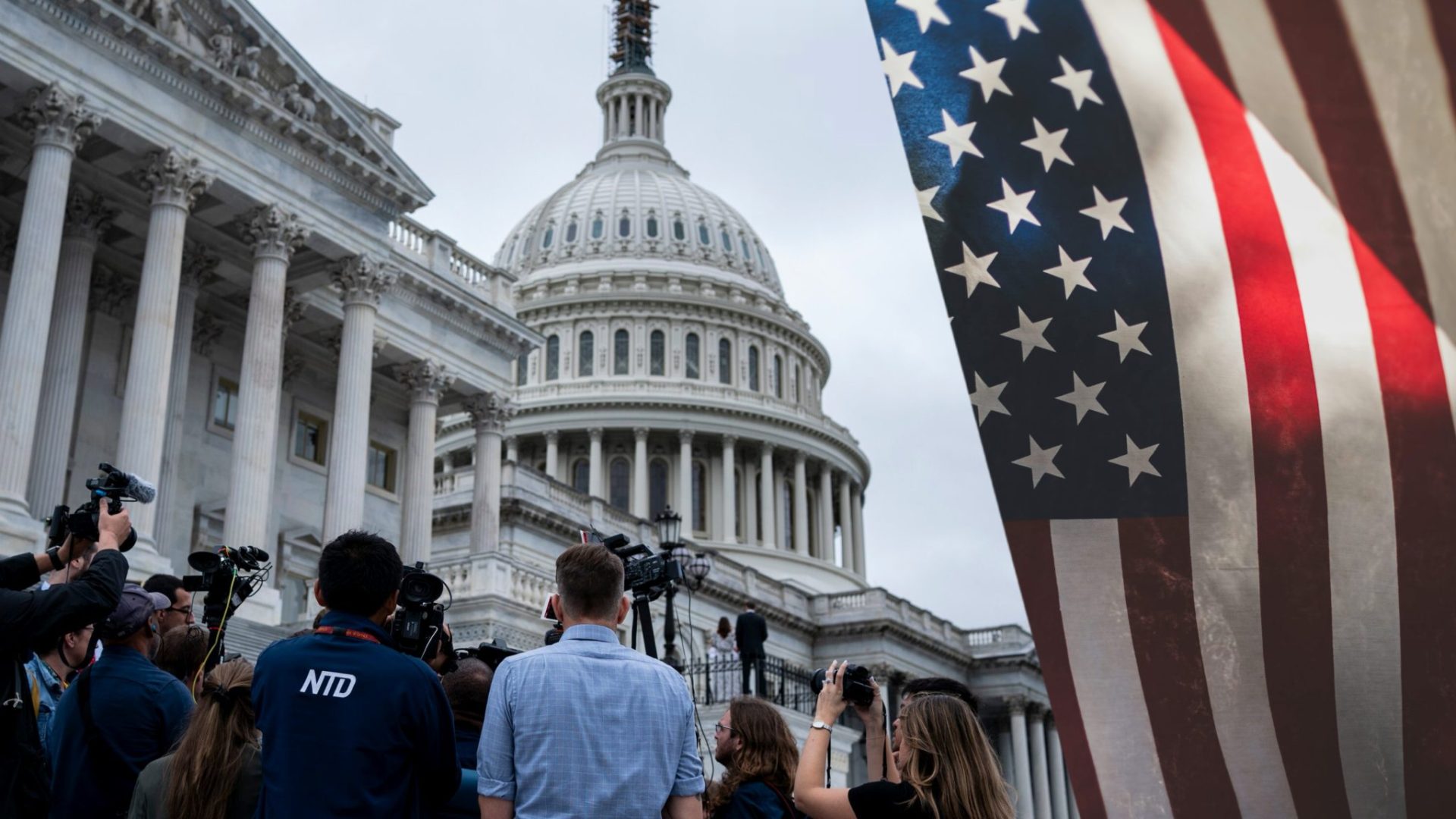
Distinguished leaders, policymakers, and survivors unmasked the brutal realities of oppression and Christian persecution worldwide. However, they not only rallied together to promote solutions to end it, they also put a special focus on journalism, and the role news tellers have in covering the grave reality of Christian persecution with piercing clarity.
Jennifer Nohelty, board chair and CEO of WPI, cut straight to the heart of the matter: “We realize that there’s a real problem in journalism.” She explained how WPI’s mission is “to encourage, equip, and empower journalists — and especially student journalists — to discover, describe, and document issues and events affecting freedom, faith, and family.” The goal, she stressed, is to restore reporting that equips readers to reach their own informed conclusions rather than being spoon-fed narratives by ideologically compromised outlets.
Restoring trustworthy journalism, Nohelty argued, is non-negotiable. To that end, WPI partners directly with schools and universities, sending out veteran reporters to mentor the rising generation. The broader strategy, however, is to shine a spotlight on chronically underreported stories — Christian persecution, for example — through events designed to cause discomfort. That discomfort, she contended, is the spark that moves people to investigate further, give generously, volunteer, take ownership, deepen their commitment, and recruit others, ultimately forging strong networks that sustain frontline ministries and, over time, help fight persecution itself.
The panelists powerfully reinforced this vision throughout the evening and in exclusive remarks to The Washington Stand. “Christians are paying a high price for their faith,” declared Troy Miller, president and CEO of National Religious Broadcasters. “Churches destroyed, pastors in prisons, families uprooted. Confessing Christ remains one of the most dangerous acts a person can undertake in many regions of the world. More than 380 million Christians live under high levels of persecution, and yet the mainstream media stories account for only about 2% of the coverage.” But “the persecuted church stands firm. They proclaim the gospel with clarity and courage that should humble and stir us.”
Speaker after speaker warned that American believers remain dangerously unaware of these horrors, lulled into complacency by the very freedoms others die to possess. Miller was blunt: “[W]e must confront at home” the reality that “one of the greatest problems is not just cultural hostility. It is … apathetic, lukewarm pulpits. We put a tremendous effort into addressing regulatory pressures, ownership concerns, legislative challenges, and censorship. Those issues matter, but none of them are as spiritually damaging as the pulpits that refuse to preach the whole counsel of God.” Societies do not collapse “by accident,” he continued, but by believers choosing to hide “truth and light … inside the church” instead of releasing it into a dark world.
Representative Marlin Stutzman (R-Ind.) echoed the urgency. In remarks to TWS, he explained that “God’s always been a very important part of my life. And so, as I am part of the policy-making in the United States, religious freedom is one of those issues that I feel very strongly about. Not only for other parts of the world, but, really, here at home as well.” Just as journalists are called to uncover truth and pastors to proclaim it, elected officials, Stutzman insisted, bear a similar duty to use their platforms and votes to promote these grave concerns.
At its core, Nohelty told TWS, the entire effort hinges on one thing: “the biggest issue is awareness,” because when people remain ignorant, they remain inactive. Yet awareness alone is not enough — what happens when knowledge collides with fear?
That critical question fell to Virginia Prodan, the international human rights attorney, survivor of communist Romania’s secret police, and bestselling author, who shared with TWS a stirring testimony of courage forged in the crucible of persecution itself.
“It’s very important to me to share with people not only in America, but all over the world, what persecution looks like,” she stressed. “Because I survived persecution under communism, under Nicolae Ceaușescu, and by the grace of God, I had the opportunity to live in America.” Yet over the decades, Prodan has watched with growing alarm as the nation she once fled to for refuge begins to echo the very ideologies she escaped. She sees America “being changed in so many ways,” with “many people [turning] their backs to God.” She insisted, “I want to make them aware that there is no freedom without Christ. We have freedom in Christ,” but “apart from Christ, we do not have freedom — not even in America.”
To those who’ve tasted tyranny, she continued, “freedom is precious.” That hard-won perspective drives her warning: Marxist and LGBT-related ideologies are gaining ground in America, and it comes at a cost. Increasingly, she observed, “many people are more afraid of the government now than they are afraid of God.” But Scripture is clear, Prodan asserted: “You cannot mock God.”
Far from breeding despair, persecution taught Prodan that God transforms pressure into purpose. It forces a soul to its knees and then to its feet with the simple prayer, “Lord, here I am. Send me.” In that surrender, she testified, “You will see God’s power in you; God’s power in others.” Her charge to the American church was clear: “[T]oday, God is calling each one of us to stand up for freedom, for faith, [and] to exercise our faith in love, that others will know that there is a God in heaven.” Faithful obedience becomes the magnet that draws hardened hearts to exclaim, “I want God to be my God.” That, she said, is how a nation keeps its light shining on the hill — when every believer resolves “to do our part.”
Prodan concluded:
“When He takes a nobody in His hands, He makes it a somebody for the entire world. So, no matter what dream you have, let that dream go … and ask the Lord to build His dream in your life. … [W]e have a huge responsibility. We have lived under freedom for such a long time. It’s our time to bring Christ, freedom, and prosperity back to America.”
“America is the best country in the world. … Let’s just not destroy it. Because … when America has powerful, strong roots in Christianity, the whole world is helped. … Don’t criticize yourself and say, ‘Oh, somebody else will do it.’ No. God created you for a time like this. Instead of saying, ‘Why me? Why do I have to do this?’ … Change it to say, ‘Lord, what do you want me to do?’ And you will find out, because God said that He will put His hands on our back and say, ‘This is the way. Walk in it.’”
Sarah Holliday is a reporter at The Washington Stand, a news division of the Family Research Council.






Leave A Comment
You must be logged in to post a comment.