
Iranian threat, appeasement, and history
History teaches that evil does not stop because you ask it to; it stops when someone with courage decides to stop it
March 10, 2026
Reprinted from American Thinker
History is a warning system that teaches patterns, exposes illusions, and reminds us that evil, when left unchallenged, grows bolder. One of the clearest lessons of the twentieth century came in 1938, when British Prime Minister Neville Chamberlain, desperate to avoid another world war, chose appeasement as his strategy for peace. In the Munich Agreement, he surrendered the Sudetenland — a fortified, strategically vital region of Czechoslovakia — in exchange for Adolf Hitler’s promise that Germany had “no further territorial ambitions.” Chamberlain returned home waving the agreement as proof that diplomacy could tame aggression. But history proved him tragically wrong. Within months, Hitler seized the rest of Czechoslovakia and soon after invaded Poland, plunging the world into the deadliest conflict in human history.
The lesson was unmistakable: you cannot negotiate with evil because evil does not negotiate — it advances. Agreements mean nothing to those who see them only as tools to buy time. Concessions are interpreted not as goodwill, but as weakness. Munich acts as a permanent reminder that delaying confrontation does not prevent conflict; it magnifies it.
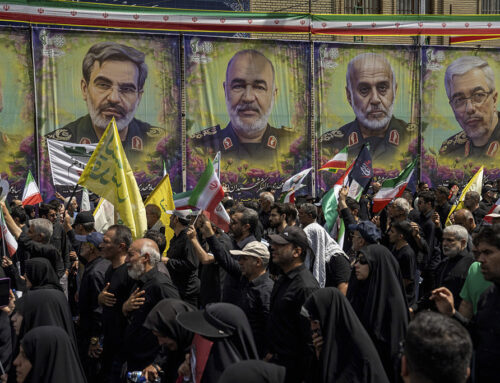
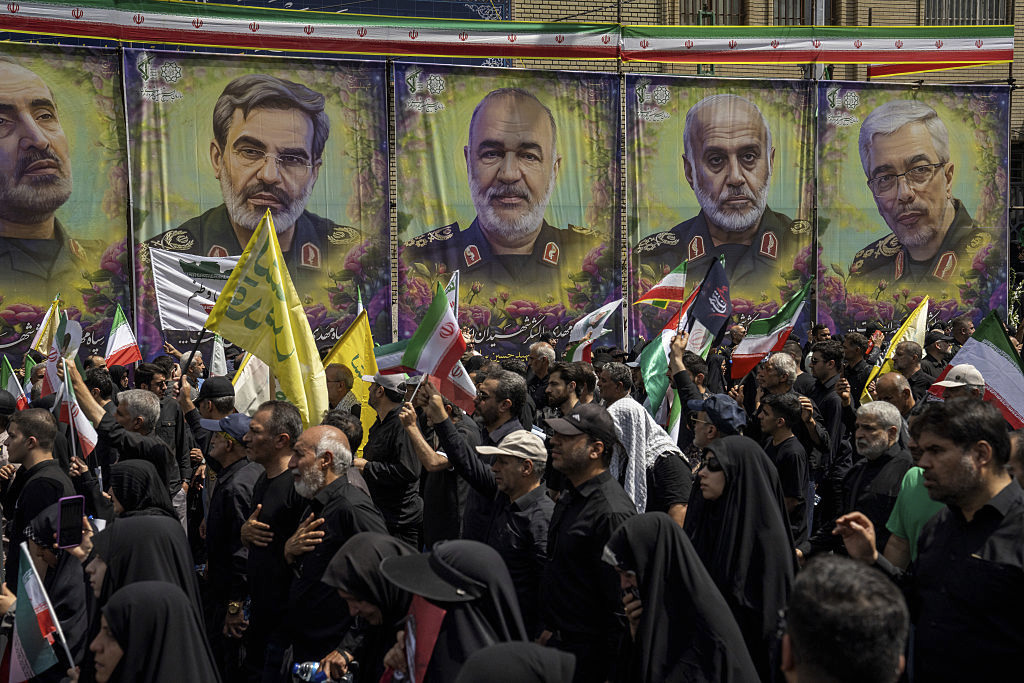
Fast forward to 1979, and the world witnessed the birth of another regime that openly declared its hostility from day one. When Iranian revolutionaries stormed the U.S. Embassy in Tehran and held 52 Americans hostage for 444 days, it was not merely an act of aggression — it was a manifesto. The new Islamic Republic built its identity on chants of “Death to America” and “Death to Israel,” and for the next 47 years, those words were not symbolic. They were the policy.
Since 1979, every American administration — Republican and Democrat — has attempted diplomacy with Iran. There have been sanctions, back-channel talks, incentives, inspections, agreements, and resets. Some slowed Iran’s progress. None stopped it. The regime’s goals have remained unchanged: dominate the region, export its revolution through proxy militias, and ultimately acquire a nuclear weapon.
The world has watched Iran fund Hezbollah in Lebanon, Hamas and Islamic Jihad in Gaza, Shia militias in Iraq and Syria, and the Houthis in Yemen. These groups have attacked civilians, destabilized governments, and targeted American service members. Yet despite this decades‑long pattern, the international community repeatedly returned to the negotiating table, hoping that this time, diplomacy would succeed where it had always failed.
But diplomacy only works when both sides value stability. Iran values ideology. Diplomacy only works when both sides honor agreements. Iran violates them as soon as they become inconvenient. Diplomacy only works when both sides fear consequences. Iran has learned that the West’s fear of escalation often outweighs its willingness to enforce red lines.
This is why the Iranian nuclear program has advanced through every administration. Agreements have temporarily paused enrichment, but never dismantled the infrastructure. Inspections have been granted, then denied. Promises have been made, then broken. Billions of dollars have flowed into the regime through sanctions relief, and much of it has funded terrorism, missile development, and nuclear research.
Forty‑seven years of negotiations have produced the same result: Iran is closer to a nuclear weapon today than at any point in its history.
This is where leadership matters. There comes a moment when history stops whispering and starts shouting. A moment when the pattern becomes undeniable and continuing to negotiate is not diplomacy — it is denial. President Donald Trump entered office not with a desire for conflict, but with a clear understanding of history’s warnings. He saw that decades of appeasement had not moderated Iran; they had emboldened it. He saw that agreements had not changed the regime’s intentions; they had only bought it time. And he understood that a nuclear‑armed Iran would not simply threaten the Middle East — it would destabilize the world.
The analogy is simple and human: when someone breaks into your home, you confront the danger at the door. You do not wait until the intruder is standing over your bed with a loaded gun. By then, it is too late to negotiate, too late to reason, too late to hope they change their mind. Iran at the nuclear threshold is that intruder with the gun already raised.
History teaches that evil does not stop because you ask it to. It stops when someone with courage decides to stop it. Munich taught that appeasement is not peace. The last 47 years with Iran have taught the same lesson in slow motion. And today, the world stands at a crossroads where ignoring history is not just naïve — it is dangerous.
If we want a safer future, we must finally learn what history has been trying to teach us for nearly a century: peace is preserved not by negotiating with evil, but by confronting it before it becomes unstoppable.
Related Topics: Iran, Foreign Affairs, Diplomacy, War






Leave A Comment
You must be logged in to post a comment.