From Ancient Persia To Modern Iran: Examining Today’s War Through The Lens Of The Book Of Esther
March 3, 2026
Reprinted from Harbinger’s Daily
“They tried to kill us, we survived, let’s eat!”
This phrase and succinct chronicle of Jewish history is shared during Jewish feasts, reflecting the reality of antisemitism and the resilience of the Jewish people.
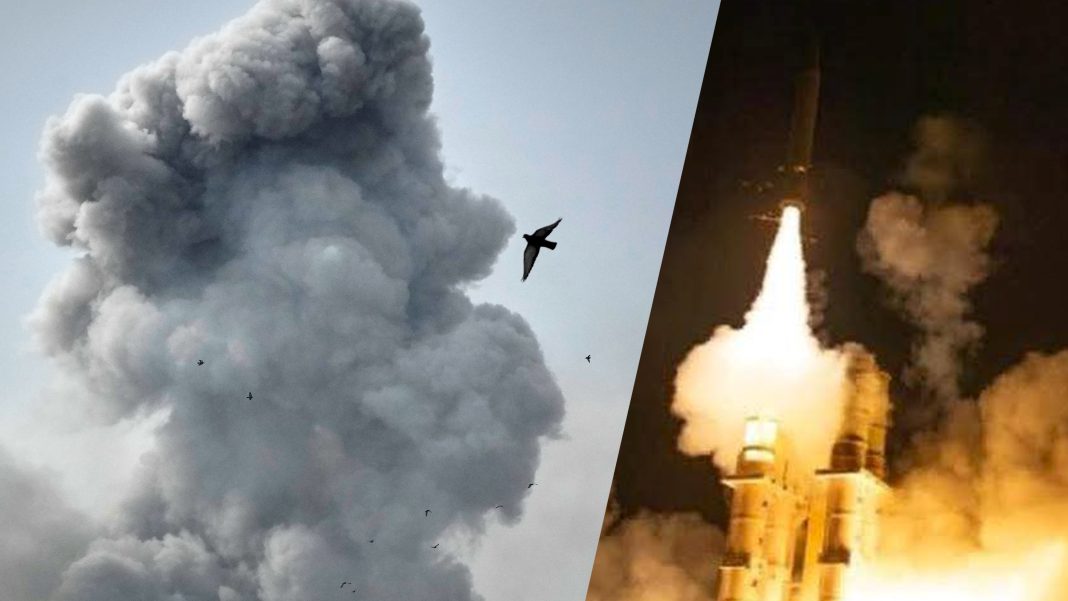
As Israel observes the feast of Purim, the barrages of Iranian missiles underscore the Jewish people’s resilience in a whole new light. As Jews worldwide gather to eat hamantaschen and read the book of Esther for the feast of Purim, Israeli soldiers remain at their posts from Gaza to the North. Israeli civilians walk in fear, as a rain of missiles launch from the same geographical location at the center of the epic story detailed in the book of Esther.
During Purim, the Jewish people recount an ancient hatred seated in the highest political power at that time, Persia. Iran’s connection to this ancient kingdom is unmistakable. Until 1935, the nation of Iran was known as “Persia.” Additionally, many Iranians today who wish to disassociate themselves from the current regime prefer to refer to themselves as “Persians.”
Persia, Haman, And The ‘Spirit Of Amalek’
While being the only book in which the name of God is not mentioned, the book of Esther profoundly underscores the hand of the Lord in every detail of preserving His people.
The Persian city of Shushan, the ruins of which are located in southwestern Iran, is the setting of the book of Esther and was once the heart of ancient civilization and military power. The heroine of this historic account is Esther, a Hebrew girl chosen by King Ahasuerus to be his queen over all of Persia. In a momentous plot filled with twists and turns, Haman, the chief minister to King Ahasuerus, plotted to destroy the Jewish people, not just from places of power within the empire, but from existing on the face of the earth.
Haman embodies an ancient hatred, Biblically referred to as the “spirit of Amalek,” a people group from which Haman descended. This bloodline of bitterness traces its roots to the children of Esau.
Their infamous history of persecuting the Jewish people began before the Israelites even took possession of the promised land. In Exodus 17, as the Children of Israel wandered through the wilderness, the Amalekites took pleasure in maliciously targeting the Hebrews as they journeyed.
Amalek stood under the divine condemnation of the Almighty, reveling in predatory attacks against the “faint and weary” of those whom God calls “the apple of His eye” (Zechariah 2:8). Generations later, the price of their evil came due. The Lord commanded Saul, the king of Israel, to execute a final judgment upon the Amalekites—complete eradication. Unfortunately, Saul chose to disobey this command, leading to the great threats faced by the children of Israel in the book of Esther, as a descendant of the Amalekites rose up against them.
The “spirit of Amalek,” found in Haman, is an ancient, all-consuming hatred, with a fixation on the elimination of the Jewish people. The Amalekites as a nation may be long gone, but the spirit that underpinned their wicked passions is alive and well today, demonstrated in the startling rise of antisemitism and calls to “wipe Israel off the map.”
Iran And A Dark Against The Jewish People
Present-day Iran sits in the geographical location of Ancient Persia. The current Iranian regime represents an organized webbed network whose very purpose of existence centers around the genocide of the Jewish people, the obliteration of the State of Israel, and the end of democratic society.
The regime has cultivated a harvest of hate through its instigated proxies of Hezbollah in Lebanon, Hamas in Gaza, the Houthis in Yemen, and its terror networks around the world. October 7th, which, not unlike the ancient attacks of Amalek, preyed upon anyone in its path, including the weakest and weariest in Israeli society, such as children and Holocaust survivors. Hamas may have carried out this horrific attack, but it was a direct act of the Iranian regime.
Just as Haman ascended the heights of Persian power to architect a decree of annihilation against the Jewish people, so too has the Iranian regime, led by the late Ayatollah Khamenei and the IRGC, seized the agents of state to advance their destructive agenda.
In their pursuit of a dark, perverted plot against the Jewish people and the Western world, they have readily subjugated and sacrificed their citizens on the altar of this twisted ideology. Ironically, many Iranians are among Israel’s most fervent allies and watch the strategic successes of the IDF with hope, seeing Israel’s strength as a catalyst for the restoration of their freedom.
The Story of Esther does not end with the annihilation of the Jewish people and the success of the “spirit of Amalek.” Instead, the Lord’s hidden hand worked through Esther at the seat of the Persian empire and the most powerful man in the world. Through Esther’s courage, the Lord orchestrated a divine reversal: the very gallows Haman built for his Jewish enemy became the instrument of his own execution.
God did not, and will not, allow His people to be wiped from existence—a guarantee not granted to Israel’s modern or ancient enemies.
What’s left of the Iranian regime should take note.
Hidden Hand Of The Lord
As Jews around the world gather to remember God’s divine intervention in the book of Esther, soldiers on the front lines and civilians in bomb shelters once again feel the weight of threats issued from many adversaries, most prominently in Iran and its proxies. The geographical landscape that once housed the throne of Susa now serves as the staging ground for a familiar, ancient hatred.
Many Jewish holidays and feasts are rooted in events that reflect the grim reality of antisemitism, such as Purim and Hanukkah. It is often said during Jewish feasts that the summary of their history is simply: “They tried to kill us, we survived, let’s eat!” Yet the resilience of the Jewish people cannot be attributed solely to military power or human tenacity; it is the “hidden hand” of the Lord, moving as it did in the days of Esther.
In Hebrew, the root of Esther means “to hide” or “conceal.” This is the incredible mystery of the story of Purim: though the name of God is never explicitly mentioned, His presence is undeniably woven into every plot twist. Just as He was concealed in the courts of Persia, the Lord has hidden and preserved the Jewish people for His sovereign purposes throughout the ages.
God has not completed his work with Israel. His continued perseverance in recent days and years of a tiny country fighting for its survival on all fronts continues to demonstrate this reality.
As long as the sun and moon endure, God’s hand is working. In Jeremiah 31:35-36 we read, “Thus says the Lord, Who gives the sun for a light by day, The ordinances of the moon and the stars for a light by night, Who disturbs the sea, And its waves roar (The Lord of hosts is His name): If those ordinances depart From before Me, says the Lord, Then the seed of Israel shall also cease From being a nation before Me forever.”
For the believer, this faithfulness finds its ultimate exemplification in Jesus Christ. Even when God’s hand is not immediately visible, His covenant remains unshakable. In His sovereignty and faithfulness, He intervenes, honoring His ancient promise to preserve a people through whom the Savior of the world would come, die, and rise again, to display His glorious plan of salvation to the nations.
His hand of redemption will not be hidden from those who seek salvation in Jesus Christ. And He will continue this work until the coming of our Lord.
Maranatha, come Lord Jesus.












Leave A Comment
You must be logged in to post a comment.