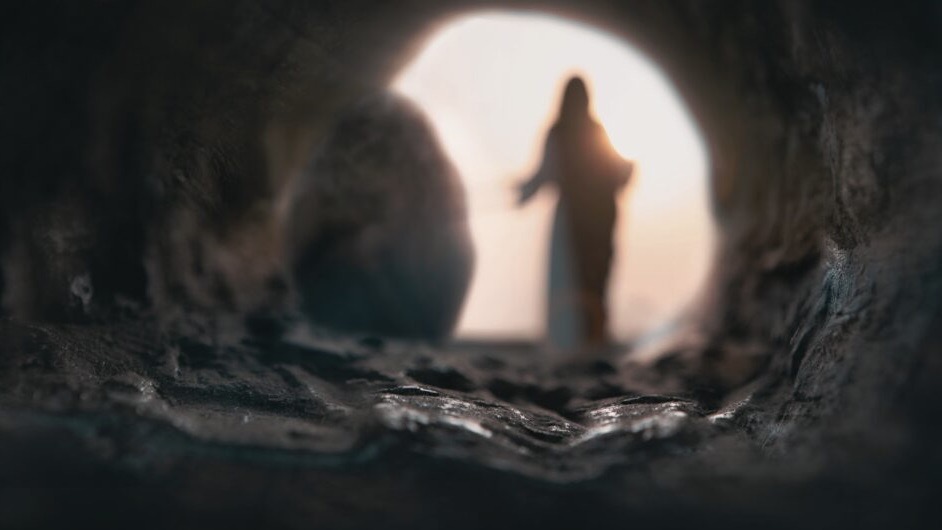
Christ’s Resurrection Is Truly ‘The Fact On Which All Other Facts Rest’
April 4, 2026
Reprinted from Harbinger’s Daily
Have you seen the therefore symbol? In mathematical and logical proofs, three little dots that form a triangle are often used to preface the conclusion of a line of reasoning. A series of premises are stated, then the conclusion is presented with the therefore symbol. This symbol— ∴ —really means, “we obtain.” In other words, “This conclusion is valid based on the premises given.”
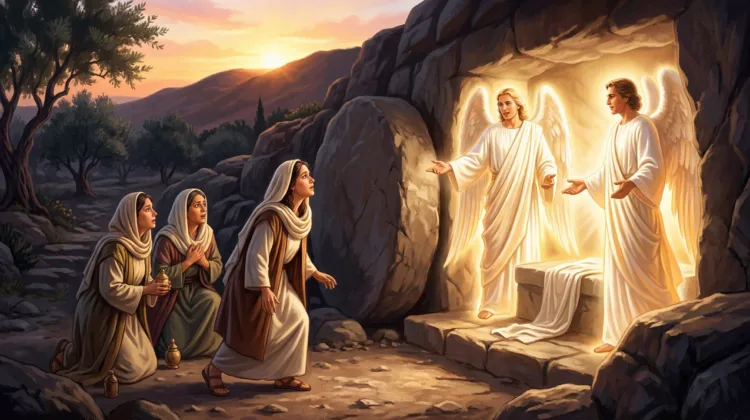
Jesus’ physical resurrection from the grave yields some vitally important therefores. In fact, central to the Christian faith is Jesus as the resurrected Son of God. Jesus not only predicted His resurrection, but all four Gospels record the empty tomb on the third day (Matthew 28:1-6; Mark 16:2-6; Luke 24:1-3; John 20:1-9).
If Jesus rose (and the evidence is compelling that He did), then Christianity is true. For the Gospel and Biblical worldview, Christ’s resurrection is truly “the fact on which all other facts rest.” Since Jesus rose, we may trust what He taught about salvation, eternity, and all the promises of God’s Word.
How do we know Jesus was resurrected?
In Biblical times there was no ability to broadcast live video of the resurrection of Jesus or His exit from the tomb. Instead, people used the evidence of eyewitnesses to prove matters in a court of law and other important areas of life. The evidence for the resurrection is based on the testimonies of more than 500 people who said they saw Jesus alive again, including in multiple locations over a 40-day period.
The list of eyewitnesses includes both people friendly and unfriendly to the implications of the resurrection. In other words, those who followed Jesus might be tempted to make up the story, but those who did not believe He was the Messiah would not have done so. The fact that James, a half-brother of Jesus who doubted Him, was among those who saw Jesus alive again shows the diversity of eyewitnesses. Ditto for Saul of Tarsus, who initially was a fierce opponent of the Gospel message.
In addition to hundreds of eyewitnesses, Jesus’ empty tomb provides strong proof for His resurrection. The Jewish religious leaders claimed Jesus’ disciples had stolen the body (Matthew 28:11-15). However, tradition holds that 10 of the original disciples were killed for their faith (excluding John) without a single one of them saying he had stolen the body. Professional historians recognize that the New Testament is the most well-preserved document from the ancient world. Renowned for its precise historical accuracy, the New Testament records many individuals who experienced the resurrected Lord.
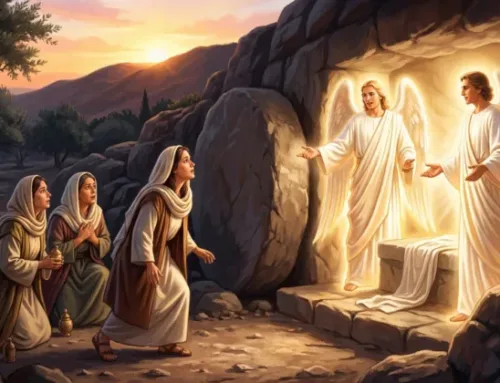
Jesus first appeared to Mary Magdalene at the empty tomb on Sunday morning (John 20:11-18). The second appearance was to the other women who saw Jesus near the empty tomb also on Sunday morning. In addition to Mary Magdalene, Matthew 28:1-10 includes “the other Mary” along with others. Luke 24:10 specifically names Joanna, Mary the mother of James (likely the same as “the other Mary” in Matthew), and other unnamed women.
Jesus also appeared to—
Two men on the road to Emmaus on Sunday afternoon—one named Cleopas and the other unnamed (Luke 24:13-32).
Peter on Sunday (Luke 24:33-35; 1 Corinthians 15:5).
The apostles, excluding Thomas (John 20:19-25).
The apostles with Thomas one week later (John 20:26-29).
Seven of the apostles at the Sea of Galilee (John 21:1-13): “Simon Peter, Thomas called the Twin, Nathanael of Cana in Galilee, the sons of Zebedee [James and John], and two others of His disciples” (verse 2).
Five hundred people at once (1 Corinthians 15:6).
James, Christ’s half-brother (1 Corinthians 15:7).
The 11 disciples before ascending to Heaven (Matthew 28:16-20; Luke 24:50-53; Acts 1:1-9).
After His ascension, Jesus also appeared to Stephen before he was stoned (Acts 7:55-56), to Paul (recorded in Acts 9:3-6 and 1 Corinthians 15:8), and to the Apostle John in Revelation 1:9-19. Not including the people who saw Jesus in a vision after His ascension, at least 513 different people appear to have seen the risen Lord. This is far more than enough evidence to seriously consider the claim that Jesus literally rose from the dead.
So, what conclusions may we derive from these facts? Vitally important ones! Jesus rose, in order to—
Make it possible for us to know God (1 John 5:20).
Pay for sin and rescue humanity (Mark 10:45; John 10:15).
Fulfill prophecy (Luke 24:27; John 5:39).
Show us the Father (John 14:8-9).
Give us the New Covenant (Hebrews 9:15; 12:24).
Be the Passover Lamb for all persons (1 Corinthians 5:7).
Destroy the works of Satan (1 John 3:8).
Purchase and initiate the church (Matthew 16:18).
Usher along history and prepare for His return (Matthew 24:30; Mark 13:26; 14:62; 1 Corinthians 10:11; 1 Peter 1:20-21).
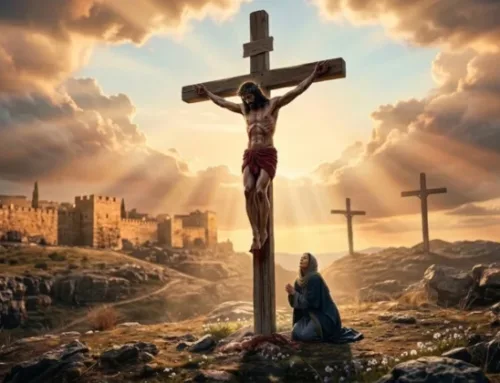
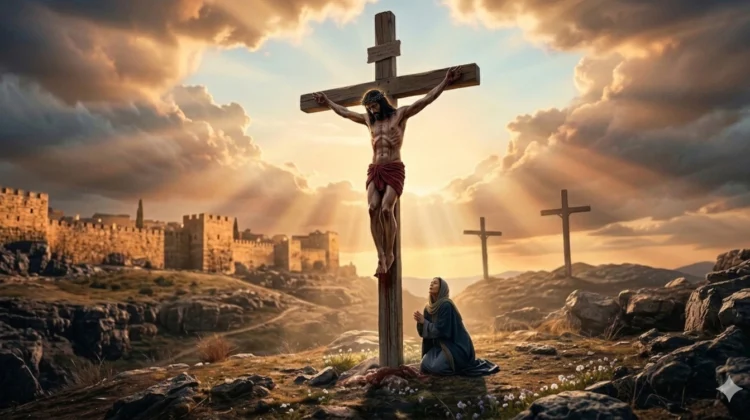
These are just a few of the precious therefores of Christ’s resurrection. God’s sovereign power and control was never more clearly manifested than on the cross and in Jesus’ power over death. Such precious realities can put joy in your heart and give you confidence that sustains you through each day.
Christ is risen, our faith is valid, and each believer’s eternity is secure. Thanks be to God for His indescribable, immeasurable, inexpressible gift! (2 Corinthians 9:15).





Leave A Comment
You must be logged in to post a comment.