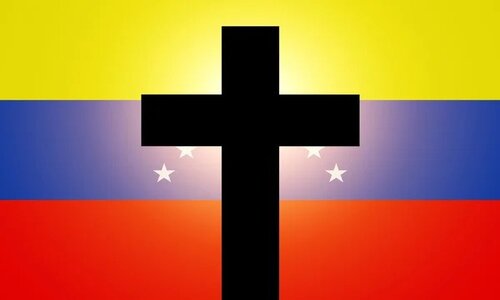
After The Silence: Why Venezuelan Christians See Hope After Maduro
January 07, 2026
By PNW Staff
Reprinted from Prophecy News Watch
For years, Venezuelan Christians learned how to worship under watchful eyes. Sermons were measured. Humanitarian aid was rationed by permission. Pastors prayed boldly in private and cautiously in public. Under Nicolás Maduro, faith was not outlawed–but it was controlled, monitored, and punished when it refused to kneel. Now, with Maduro captured and removed from power, something unfamiliar is stirring across Venezuela’s churches: hope that religious freedom might finally be more than a whispered prayer.
The persecution of the church in Venezuela was never as openly brutal as in Cuba or Nicaragua, but it was methodical, strategic, and deeply corrosive. Hugo Chávez laid the groundwork by fusing socialism with messianic political language, attempting to replace the moral authority of the church with loyalty to the state.
While he initially courted evangelicals, his embrace quickly soured. National expropriations stripped church-run schools and charities of resources. Government loyalists infiltrated congregations. Chávez’s alignment with Cuba, open hostility toward Israel, and flirtations with Holocaust denial shocked Christian leaders who had once hoped for cooperation.
Maduro perfected this system of pressure. When intelligence surveys revealed that nearly one-third of Venezuelans identified as evangelical–far higher than most official estimates–the regime panicked. That number represented not just faith, but influence. Churches were one of the last functioning civil society institutions in a collapsing nation. At first, Maduro attempted charm: symbolic gestures, Bible distributions, public praise for “patriotic” pastors. But it was a trap. Those who accepted state favor were expected to repay it with silence.
Those who didn’t paid a price.
During the COVID-19 pandemic, the mask fell completely. As hunger spread and hospitals collapsed, churches stepped in with food programs, medicine distribution, and pastoral care. Instead of welcoming help, the regime restricted it. Permits were denied. Aid shipments were blocked. Pastors were warned not to distribute food without state approval. Maduro sought to maintain a monopoly on compassion–presenting the government as the sole provider of relief while portraying independent Christian charity as subversive. Feeding the hungry became a political act.
The legal machinery of repression followed. In March 2021, new “anti-terrorism” regulations forced NGOs and faith-based organizations to submit confidential records: donor identities, beneficiary names, internal plans. In practice, this transformed churches into open books for intelligence services. Many pastors understood what this meant–surveillance, intimidation, and eventual punishment. Some shut down ministries rather than expose vulnerable believers to government scrutiny.
Harassment intensified. According to the U.S. Commission on International Religious Freedom, Venezuelan authorities routinely summoned pastors for questioning, threatened church leaders anonymously, and publicly attacked clergy who criticized corruption or human rights abuses. Religious radio stations faced pressure. Church-run media outlets were monitored. In one chilling example, journalist Carlos José Correa Barros of the Christian radio network Fe y Alegría was detained by masked military personnel in 2025 and disappeared for nine days before his release. The message was unmistakable: even Christian journalism was not safe.
Bureaucracy became another weapon. Religious groups were required to register with the Directorate of Justice and Religion, but approval could take years–or never arrive at all–unless loyalty to the regime was demonstrated. According to USCIRF, some churches waited nearly a decade for recognition. Without registration, churches could not legally operate, own property, or receive aid. Faith was reduced to paperwork, and paperwork was reduced to obedience.
Maduro also wielded Venezuela’s so-called “Hate Law,” a dystopian tool worthy of Orwell’s 1984. Pastors who preached against corruption or spoke about moral accountability risked being accused of inciting hatred. Biblical truth itself became suspect. Corruption could be celebrated. Tyranny could be praised. But repentance was dangerous.
And yet, the church survived.
That survival is what makes this moment so powerful. Maduro’s capture does not automatically restore freedom. Venezuela remains fragile. Institutions are damaged. Trust is thin. But for the first time in years, Christians can imagine rebuilding without fear of retaliation. Churches can envision reopening ministries, reclaiming humanitarian work, and speaking openly to a nation desperate for moral clarity.
Religious freedom is not a side issue in Venezuela’s recovery–it is central. A nation cannot heal when conscience is policed and compassion is regulated. Christians have long filled the gaps left by a failed state: feeding families, educating children, comforting the grieving. Free the church, and you free one of the strongest forces for national renewal.
The hope spreading through Venezuela’s congregations today is not triumphalism. It is sober, hard-earned faith. Believers know that freedom must be guarded, not assumed. But they also know this truth: darkness does not survive exposure.
If Venezuela is to rise from the ruins of authoritarian socialism, it will not be rebuilt by slogans or strongmen. It will be rebuilt by free people–serving freely, speaking freely, worshiping freely. For the first time in a generation, Venezuelan Christians are not just praying for endurance.
They are praying for revival–and for a nation finally free to believe.


Leave A Comment
You must be logged in to post a comment.