
A Tale of Two Obituaries — and Two Very Different Standards
How corporate media soften tyrants abroad while sharpening labels at home
March 9, 2026
Reprinted from American Thinker
Death is supposed to clarify a life, not distort it.
Obituaries are meant to record history, not rewrite it.
But in today’s corporate media, even death cannot escape ideological spin.
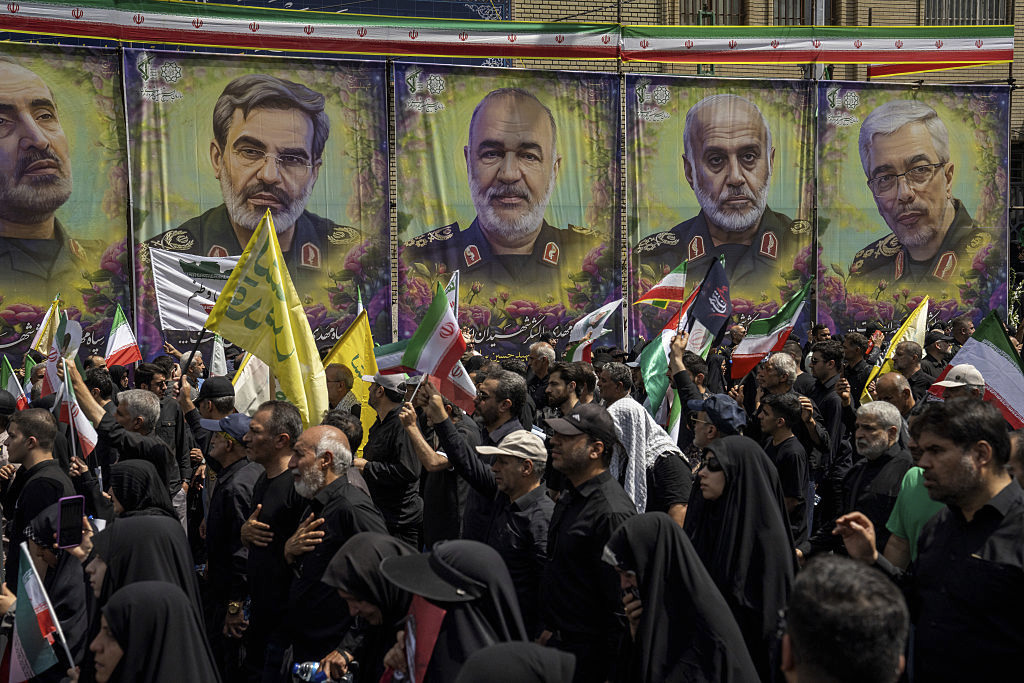
Consider the recent coverage of Ayatollah Ali Khameini, Iran’s Supreme Leader for more than three decades.
In the Washington Post, readers were introduced to a man with a “bushy white beard and easy smile,” an “avuncular figure” fond of Persian poetry and Victor Hugo’s Les Misérables. Some acquaintances described him as a “closet moderate.”
A closet moderate? That description might surprise the regime’s political prisoners — and its victims.
For more than three decades, this “moderate” presided over a regime that funded Hezb’allah and Hamas, armed militias across the Middle East, imprisoned dissidents, executed protesters, brutalized women for dress-code violations, and has American blood on its hands through decades of proxy warfare.
Yet the obituary’s opening emphasis focused on literary sensibilities and grandfatherly optics.
The New York Times struck a similarly soft chord. With “spectacles, Palestinian kaffiyeh, long robes and silver beard,” Khamenei “cast himself as a religious scholar,” affecting “an avuncular and magnanimous aloofness.” He ran the country, we are told, from “a perch above the jousting of daily politics.”
Above the jousting, perhaps. But not above repression.
Yes, both papers documented the regime’s brutality. But framing matters. Lead paragraphs shape perception. When tyrants are introduced through imagery of scholarship and avuncular charm, the moral edges blur.
The pattern is not new. When ISIS leader Abu Bakr al-Baghdadi was killed in 2019, the Washington Post initially described him as an “austere religious scholar.” Not a mass murderer. Not a genocidal terrorist. An austere scholar. The backlash forced later edits, but their instinct was revealing.
Now contrast that with coverage of Dilbert creator Scott Adams.
Adams was undeniably controversial. In a 2023 podcast, discussing a Rasmussen poll finding that only half of black Americans agreed that “It’s O.K. to be white,” he reacted harshly, suggesting that if the poll numbers were accurate, white Americans should “get the hell away from Black people.” It was blunt, inflammatory, and widely condemned. Newspapers were right to report it.
But in his obituary coverage, particularly in the New York Times, those comments loomed large. The New York Times detailed the podcast remarks at length, contextualizing the phrase’s alleged association with white supremacists and underscoring the backlash. The Washington Post prominently labeled him “far right,” after highlighting what it called his “racist comments” about the Rasmussen poll.
Consider the media’s contrast.
A ruler who funded terrorism and crushed dissent: “avuncular.”
A Jihadist responsible for genocide: an “austere religious scholar.”
A cartoonist with controversial political views: “far right.”
The pattern is hard to miss.
Adams’ comments were undeniably controversial and newsworthy. Newspapers were right to report them. But proportion matters.
For three decades, Adams was the creator of one of the world’s most widely read comic strips, skewering corporate absurdities with biting humor. Millions of Americans recognized their cubicles in Dilbert. That cultural impact deserved pride of place in his obituary.
Instead, ideological labels led the narrative.
Why does this asymmetry persist?
Part of it reflects the contemporary corporate media worldview. Domestic political dissent on the right is frequently framed as a threat to democracy. Within that paradigm, attaching a cautionary label to a conservative figure feels like responsible journalism.
Foreign tyrants, by contrast, are contextualized. They are “complex.” Their actions are filtered through historical and geopolitical frames that soften first impressions. Their brutality is acknowledged, but rarely as the opening note.
We’ve seen similar tonal softening before, from sympathetic coverage of Fidel Castro to the romanticized imagery surrounding Che Guevara. The result is an odd inversion of morality.
Obituaries are not eulogies delivered by grieving relatives. They are historical summaries. Their tone signals what a newsroom believes defines a life.
When an autocrat’s literary tastes headline his obituary while his repression is contextual background, readers notice. When a terrorist leader is introduced with academic descriptors before his atrocities, readers notice. And when a domestic cultural figure is primarily tagged with ideological shorthand, readers notice.
This is not a grand conspiracy. It reflects shared assumptions within institutions that lean left culturally and politically. Those assumptions shape which adjectives come first and which facts follow.
But credibility is cumulative. Trust erodes not from a single adjective, but from patterns.
Both the Washington Post and the New York Times have faced declining subscriptions and financial strain in recent years. The business of journalism is difficult. Yet beyond economic headwinds lies a more fundamental issue: confidence that coverage is even-handed.
When tyrants abroad receive gentle treatment while ideological opponents at home receive warning labels, readers notice.
The solution is consistency: If a man ruled through repression and sponsored terrorism, lead with that. If a man led a genocidal movement, say so plainly. If a cartoonist made inflammatory political remarks, report them — but do not let them eclipse a lifetime’s primary work unless they truly defined it.
Death does not sanctify. Nor should it become an opportunity for selective moralizing.
“Democracy dies in darkness,” we are told. It can also erode under selective illumination, where some subjects are bathed in soft light and others in harsh glare.
Obituaries reveal editorial priorities in distilled form. In the tale of these two or three, they suggest not neutrality, but narrative preference. This is not neutral reporting. It is narrative framing carried beyond the grave.
Readers are not blind. They can see which lives are framed with nuance and which come with warning labels.
And increasingly, readers are voting with their subscriptions — and walking away.
Death should clarify a life. It should not become another opportunity to rewrite it.
Brian C. Joondeph, M.D., is a Colorado-based ophthalmologist who writes frequently about medicine, science, and public policy.
Related Topics: Media








Leave A Comment
You must be logged in to post a comment.