Yes, I believe we have built the prototype. AI is advancing faster than its creators can keep up, and there is trepidation in many, downright fear in some, that what they have created — and we haven’t seen anything yet — will not be able to be controlled.
I mentioned not long ago here on ACP, I believed the Antichrist and his false prophet, both of whom will have supernatural abilities bestowed on them from their master, Satan, will use all existing technology, especially AI, along with their supernatural power to have the image of the beast appear to be alive, breathing, speaking, and to have the ability to see who does not have the name of the Antichrist in their flesh, and then kill them.
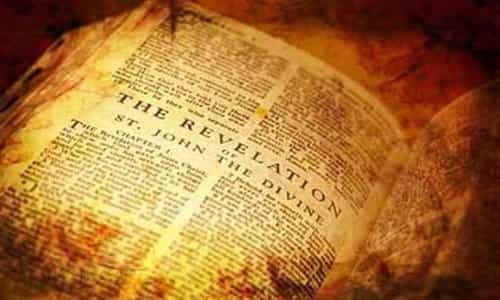
See Revelation 13.
Not allegory, not myth, not fantasy, not a story. Not symbolic. REAL HISTORY TO COME.
Because God does not lie or fail in His Word.
Why Revelation Matters: God Alone Can Foretell The Future, And He Does So With 100 Percent Accuracy
So, to answer the question posed from the article below — yes, we have already built the prototype, which is amateurish compared to what The Beast, the Antichrist and his false prophet will make to delude, control the population of the world, giving their beast created in evil the abiltiy to kill all those who refuse to take the name of the Antichrist branded into their flesh.
RELATED: Claude Mythos – One AI Model Away From A New World Order
Read on…because the time is growing VERY short and each individual had best prepare for the swiftly approaching eternity…not in bunkers, with stockpiles of ammo and canned emergency foodstuffs — no, prepare the heart, the mind, the soul, the spirit, the body to humble, to repent, to bow to the LORD Jesus Christ, Yeshua Hamashiach, to take Jesus as Salvation, Savior, Lord of daily life, faithfully, obediently, from this day forth.
I heard a man I love, admire, and who has a sweetness, a great love for Jesus, Yeshua, say he doesn’t know how much time is left, maybe thousands of years…
Hummm, very unlikely the way things are going. As they never have before.
Such a time as this…such a time is this. Don’t waste a moment. Because one of only two possible eternities awaits, depending on the choices made.
Oh, and if inclined, tell a friend, some friends, people you care about, people in your family, your neighbors about this — copy this and send it to them. No one should be lost. No one will have an excuse.
Everyone can know and understand Revelation. It is not a book in the Holy Bible to be ignored. Nothing in the whole of God’s Word ought to be ignored, not read or understood. God put everything in His living and active word for a reason. Too many neglect, never read, preach upon, think deeply about, or speak about the very important contents of Revelation.
It is a blessing to those who read it.
But…NEVER alter one word of it. Do not add to, omit. Do not change one iota. Not so much as one word. Read it and understand why. Pray to the Holy Spirit for discernment and spiritual understanding before reading, and see what happens.
It’s amazing…
Read on…
Ken Pullen, Wednesday, April 15th, 2026
Are We Building A Prototype Of “The Image That Speaks” From Revelation
April 14, 2026
By PNW Staff
Reprinted from Prophecy News Watch
Meta’s reported development of an AI version of its founder, Mark Zuckerberg, has reignited an unusual but increasingly persistent conversation at the intersection of technology, identity, and ancient prophecy. According to reporting, the company is building a photorealistic, interactive digital version of Zuckerberg capable of engaging employees in real time–trained on his voice, mannerisms, and strategic thinking. What might sound like corporate innovation to some is, to others, a striking echo of imagery found in the Book of Revelation.
In particular, the “image of the beast” described in Revelation has long fascinated theologians. The text describes a future system in which an image is given life, capable of speaking, commanding attention, and enforcing allegiance. In Revelation 13:15, it states that the image “was given breath so that it could speak and cause all who refused to worship the image to be killed.”
For centuries, such language was interpreted symbolically or dismissed as metaphorical imagination. But in an age of AI-driven avatars, real-time synthetic voices, and globally networked digital identities, some observers are beginning to ask whether the technological scaffolding for such a phenomenon is quietly emerging.
Meta’s initiative is not science fiction. The company is reportedly building AI-generated 3D characters that users can interact with in real time, with Zuckerberg’s own digital likeness serving as a prototype. The system is designed not just to respond, but to emulate personality–drawing from public statements, leadership philosophy, and behavioral patterns. In essence, it is not merely a chatbot, but a living simulation of authority: a digital proxy that can speak as the founder, think as the founder, and potentially guide decisions in his absence.
This raises an unsettling question: what happens when authority is no longer tied to a physical presence?
The theological concept of the “image” in Revelation was never just about sculpture or statue. It is about agency–something that appears lifeless but is made to act, speak, and command. In a world of artificial intelligence, that distinction becomes blurred. A system like Meta’s proposed “personal superintelligence” could theoretically exist simultaneously across millions of devices, in workplaces, homes, and public spaces. It could speak in real time, adapt its tone to each user, and maintain the illusion of presence everywhere at once.
To some futurists, this is simply the next phase of digital assistants. To others, it begins to resemble something more totalizing: a centralized intelligence capable of shaping perception at scale.
The concern among some religious commentators is not that a single AI avatar fulfills prophecy in a literal sense, but that the architecture of such systems mirrors the conditions described in the text. In Revelation, the “image” is not isolated–it is part of a broader system of control involving allegiance, economic participation, and enforced recognition. The famous “mark of the beast” follows shortly after the image’s activation, linking identity and access to participation in the system itself.
Modern AI ecosystems already hint at fragments of this structure. Digital identity systems, biometric authentication, algorithmic recommendation engines, and personalized AI companions increasingly mediate access to information, commerce, and even employment. If a future AI system were embedded deeply enough into these structures, it could theoretically influence participation in society itself–not through overt coercion, but through dependency.
What makes Meta’s experiment particularly significant is its focus on personality replication. The Zuckerberg AI is not just a tool–it is being trained to reflect a specific human identity, down to tone, philosophy, and decision-making style. If extended broadly, such technology could allow leaders, influencers, and institutions to maintain a continuous presence beyond physical limitations. A CEO could, in effect, be “present” in every meeting, every office, and every conversation simultaneously.
At that point, the distinction between representation and replacement begins to erode.
Critics argue that this is where technological optimism must be tempered with philosophical caution. The more human-like these systems become, the more authority they may accumulate–not because they are conscious, but because they are persuasive. A speaking image, infinitely available and perfectly consistent, may carry more influence than the unpredictable human it is modeled after.
It is here that the language of Revelation becomes, at minimum, a provocative metaphor for modernity. A speaking image. Global reach. Enforced alignment. Systems of participation tied to allegiance. Whether one interprets the text as literal prophecy or symbolic warning, the parallels invite reflection on how power may evolve in an AI-saturated world.
Of course, it would be reductive to claim that Meta’s research or Zuckerberg’s digital avatar is an attempt to fulfill ancient prophecy. The company’s stated goals are corporate efficiency, personalization, and competitive advancement in the race toward artificial general intelligence. Yet technological systems rarely remain confined to their original intent. They evolve, scale, and integrate into broader infrastructures of daily life.
And history shows that once a system becomes ubiquitous, it becomes invisible.
The deeper question, then, is not whether AI will become a “beastly image” from apocalyptic literature, but whether humanity is building systems that concentrate voice, presence, and authority into something that behaves like one. A distributed, speaking intelligence that is always present, always responsive, and increasingly indistinguishable from human agency.
In that sense, the prophecy may function less as a prediction and more as a warning–a narrative framework describing what happens when images stop being reflections and begin acting as rulers.
Whether one views these developments through a theological lens or a technological one, the convergence is difficult to ignore. We are entering an era where identity can be replicated, presence can be simulated, and authority can be automated. And as companies like Meta push forward into “personal superintelligence,” the boundary between human voice and synthetic echo continues to thin.
The ancient text of Revelation speaks of an image that lives, speaks, and commands attention across the world. The modern world is now building systems that do exactly that–just without calling them alive.
The question that remains is not whether we have built such a thing, but what we will do once we realize we already are.
RELATED:









Leave A Comment
You must be logged in to post a comment.