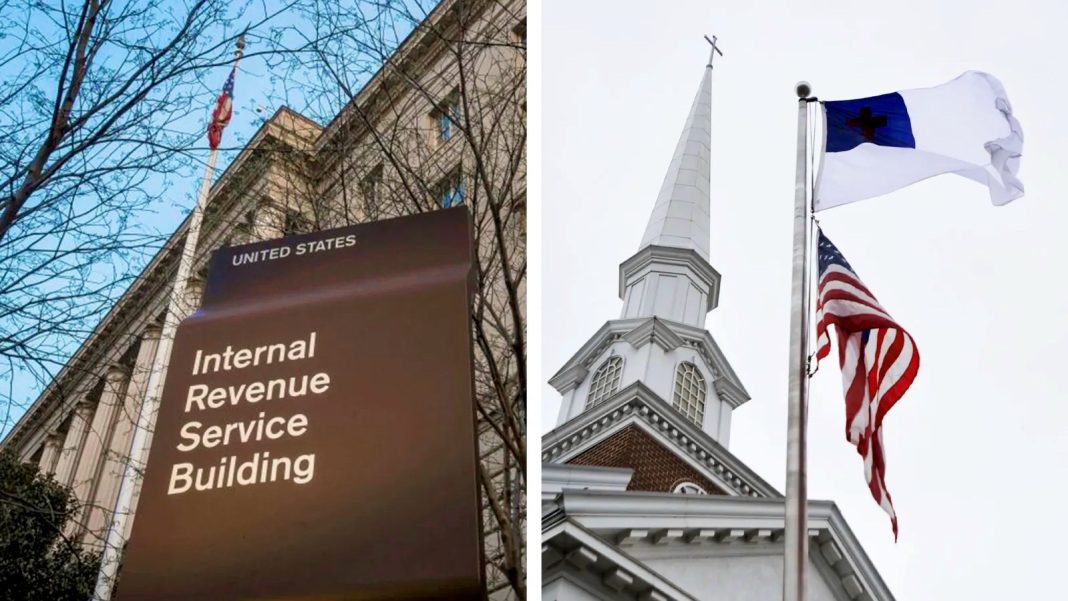
Despite Conclusions Of The IRS, Federal Judge Upholds Law Barring Churches From Political Endorsements
April 2, 2026
Reprinted from Harbinger’s Daily
A federal judge on March 31 dismissed a lawsuit that would have weakened the Johnson Amendment, which bars nonprofits, churches, and pastors from endorsing or opposing political candidates. As part of the ruling, the judge also rejected a settlement for the plaintiffs, the National Religious Broadcasters (NRB), Sand Springs Church in Athens, Texas, and First Baptist Church of Waskom, Texas.
In August 2024, the NRB and the two churches filed suit against the IRS and its commissioner, challenging section 501(c)(3) of the IRS code, known widely as the “Johnson Amendment,” a 1954 law that says certain organizations such as churches receiving a tax exemption and non-profit status “may not attempt to influence legislation as a substantial part of its activities and it may not participate in any campaign activity for or against political candidates.”
The groups argued that the law violates their religious freedom and freedom of speech.
“Plaintiffs have a bona fide religious conviction that they must teach and preach about all areas of life,” the complaint states. “No area of life is exempt from the reach of Scripture. And teaching is not limited to generalized principles. Proper teaching includes a precise application of scriptural principles to every area of life. This includes the spiritual duty to teach about issues of life that may arise in the public arena.”
The IRS agreed in July 2025, filing a motion arguing that tax exemptions cannot be taken from churches who choose to endorse a political candidate.
Texas U.S. District Judge J. Campbell Barker, who dismissed the case, also ruled that the court was barred from approving the settlement the plaintiffs sought.
Michael Farris, NRB’s general counsel, responded, stating, “None of these plaintiffs have violated the Johnson Amendment, nor have they been subject to IRS sanctions. Instead, they engage in self-censorship because of the Johnson Amendment’s impact on their First Amendment freedoms.”
Farris further explained the court’s decision to the Washington Watch with Tony Perkins.
“[T]he judge ruled upon [the Anti-Injunction Act], which is a long-standing law that says you can’t sue about your taxes, you have to pay your taxes first and then sue to get them back,” Farris said. “Well, that’s nice if we’re talking about ordinary tax liability, but here we’re talking about freedom of speech … [T]he Supreme Court and other appellate courts have endorsed multiple times [the principle that] you don’t have to violate the law first to be able to challenge the constitutionality of laws.”
The NRB will appeal to the U.S. 5th Circuit Court of Appeals, Farris said.








Leave A Comment
You must be logged in to post a comment.