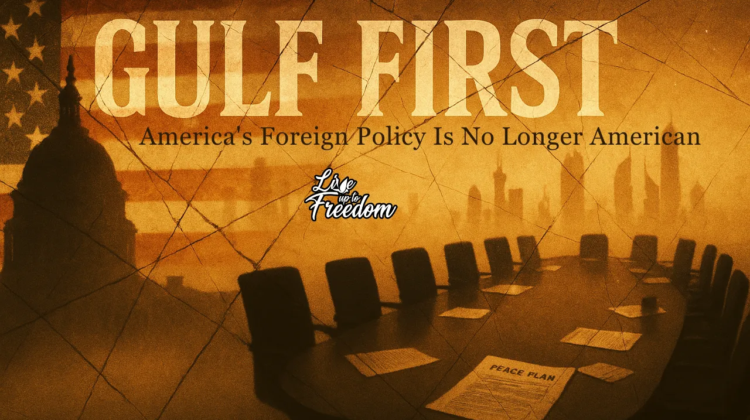
The following is here because it’s a well-written informative article, written by a real journalist, Aynaz Anni Cyrus. There’s one great glaring problem with the information. It’s conceived and written from a 100% worldview.
No God. No Bible.
Without God, without the Bible, it’s like going to a well for water with a bucket that has a rotted-out bottom, or trying to get water from a dry well.
What has been and is unfolding in the Middle East, worldwide, is Bible prophecy. Israel is the center of the world. The main focus of everything past, present, and future. America is just a part of it all, but not the heart of it all.
There are going to be ongoing wars in the Middle East. No peace. The appearance of peace, for a while, which is just a lull, a regrouping, before the next war.
With a really big one in the future. Ezekiel 38. Perhaps much sooner rather than later, seeing how Iran is in such dire straits economically, and suffering the worst drought in centuries. With all sorts of internal upheaval, while they put all their attention and money into weapons, they vainly believe will be capable of destroying Israel.
America fails to understand the times, the real situation. Fails to understand the Middle East, Islam, and Israel’s place in not only world history — but eternal history.
Everything written, devoid of taking God into consideration, taking the Holy Bible into consideration, falls far short. Granted, some good or interesting information can be gleaned, but it’s only seeing through a narrow field of vision, no real vision, because a person, a nation, cannot ever see well, clearly, the whole picture until and unless placing God foremost, the Holy Bible foremost, and the vain doings of men and women in their proper place.
Why do the nations rage,
And the people plot a vain thing?
The kings of the earth set themselves,
And the rulers take counsel together,
Against the Lord and against His Anointed, saying,
“Let us break Their bonds in pieces
And cast away Their cords from us.”
He who sits in the heavens shall laugh;
The Lord shall hold them in derision.
Then He shall speak to them in His wrath,
And distress them in His deep displeasure:
“Yet I have set My King
On My holy hill of Zion.”
“I will declare the decree:
The Lord has said to Me,
‘You are My Son,
Today I have begotten You.
Ask of Me, and I will give You
The nations for Your inheritance,
And the ends of the earth for Your possession.
You shall break them with a rod of iron;
You shall dash them to pieces like a potter’s vessel.’ ”
Now therefore, be wise, O kings;
Be instructed, you judges of the earth.
Serve the Lord with fear,
And rejoice with trembling.
Kiss the Son, lest He be angry,
And you perish in the way,
When His wrath is kindled but a little.
Blessed are all those who put their trust in Him.
Psalm 2
Read on…
Ken Pullen, Wednesday, December 3rd, 2025
The Mirage of ‘Arab Mediation’
Behind closed doors: panic, economics, and a collapsing Iran.
December 3, 2025
By
Reprinted from Frontpage Magazine
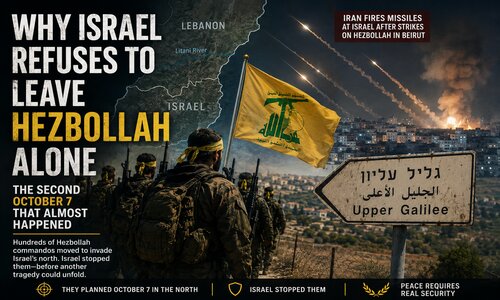
The Middle East went through a twelve-day shockwave five months ago, a rupture that broke every old assumption about power, fear, and survival. Nations that once postured as regional lions are now whispering in Washington’s hallways like anxious shareholders at a collapsing corporation. And at the center of this panic sits Mohammed bin Salman, Saudi Arabia’s crown prince, the man who spent the better part of a decade locking horns with Iran, suddenly presenting himself as a peacemaker between Tehran and Washington.
Americans are not being told the truth about what is driving this new “Arab mediation.” It isn’t a humanitarian gesture. It isn’t diplomacy. And it certainly isn’t a new era of tolerance. It is exactly what desperate regimes do when the pieces on the board shift faster than they can keep up.
There is no single explanation for why the Arab states are scrambling to mediate. The truth is far more layered than any Western analyst will admit. Different capitals are bracing for different outcomes: some fear a weakened Iran that lashes out; some fear a collapsing Iran that spills chaos across borders; some fear a vengeful Iran that burns the region on its way down, and some fear a revived, secular Iran under real leadership that would instantly eclipse the Gulf’s artificial stability. And over all of it hangs a newer, sharper fear, an Israel whose military reach now overshadows every Arab red line.
These scenarios don’t contradict each other.
They compete with each other depending on one thing: America’s next move.
Every Arab capital is running calculations based on U.S. policy, not regional autonomy.
And that is why they are sprinting toward “mediation”: because the future of the Middle East no longer depends on their decisions, it depends on America’s.
Since neither Washington nor the Arab capitals will say any of this out loud, here’s what’s actually driving this moment.
The War That Broke the Myth
For decades, Iran built its power on myth: the myth of unstoppable missiles, the myth of an impenetrable intelligence apparatus, the myth of unity within the so-called “Axis of Resistance.” Even those who privately doubted Iran’s strength still behaved as though Tehran was too dangerous to corner. The regime counted on fear more than reality.
But the twelve-day confrontation shattered that mythology.
Israel demonstrated that it could strike Iranian infrastructure, intelligence centers, and command networks, not theoretically, not in simulations, but in real time. And it wasn’t just the physical damage that destabilized the region; it was the psychological blow. The Arab monarchies realized that the country they feared for forty years was not a regional titan. It was a vulnerable state with a brittle military, a fragmented command structure, and a declining ability to project power.
Tehran insists the war didn’t diminish its strength. That is the official line. But outside Iran’s borders, the conclusion is the opposite:
Iran bled. Iran broke. And Iran’s deterrence cracked open.
This is not just an Israeli assessment. It is the quiet conversation in Riyadh, Doha, Abu Dhabi, and Cairo. These conversations began the moment they saw how deeply Israel could penetrate Iranian defenses and how little Iran could do in return.
The old fear was that Iran was too strong.
The new fear is that Iran is too weak, and therefore more dangerous in ways no one can control.
Iran’s Weakness Is Now the Region’s Biggest Variable
The Arab states are not intervening to “save” Iran. They are intervening to contain the consequences of Iran’s decline.
For years, Tehran’s strategy was expansion: Lebanon, Syria, Iraq, Yemen, Gaza, every one of them used to amplify Iranian power. But after the war, Iran’s priorities shifted from expansion to survival. The regime is now in pure defensive posture, protecting its inner circle, securing its borders, and praying its domestic crises do not rip through the last remaining pillars of the Islamic Republic.
When a regime like Iran gets weaker, it doesn’t get quieter.
It gets unpredictable.
Unemployment, inflation, water shortages, blackouts, pervasive corruption, and waves of protests have already stretched the system to its thinnest point since 1979. Add the military losses and psychological defeat of the twelve-day war, and Arab governments now see a neighbor teetering on the edge of becoming what security scholars call a “failed state,” a country whose collapse does not end at its borders.
A failed Iran would mean:
- Militia fragmentation and uncontrollable armed groups
- Spillover terrorism from IRGC remnants
- Hormuz instability that cripples global oil markets
- A desperate Tehran lashing out to avoid internal implosion
For Saudi Arabia, Qatar, and the UAE, states that built their entire national strategy on stability, a collapsing Iran is not a geopolitical puzzle. It is an economic and security nightmare.
The Arab rulers are not mediating to save themselves.
Israel’s Strategic Dominance Terrifies the Arab World More Than Iran Ever Did
Here is the part American audiences will not hear from mainstream analysts:
Arab countries are now more afraid of Israel than of Iran.
Because Israel’s capabilities revealed themselves in uncompromising clarity.
Israel hit inside Iran.
Israel hit inside Syria.
Israel hit inside Lebanon.
Israel hit inside Qatar, publicly acknowledging an operation targeting Hamas negotiators in Doha.
This crossed every Arab red line.
Arab intelligence services realized something new and deeply unsettling:
Israel no longer sees Middle Eastern borders as meaningful barriers. If Israel sees a threat, it strikes, whether the target is in Tehran, Damascus, Beirut, or a hotel suite in Doha.
A state with reach that deep and intelligence that precise is a state no Arab monarchy can afford to antagonize.
The shift is visible in the language of Arab policy circles:
- “The Israeli threat is now structural.”
- “Israel operates without American permission.”
- “We are all within range.”
This fear explains why Saudi Arabia, Qatar, and Egypt suddenly want to be “mediators.” They are not balancing Iran and Israel. They are trying to prevent a conflict in which they are the collateral damage.
The Nightmare Scenario: An Iran That Burns the Region on Its Way Down
Arab rulers have learned one lesson from the last forty years:
A cornered Islamic Republic becomes reckless.
Iranian officials have openly spoken about closing the Strait of Hormuz, striking Gulf capitals, escalating in Yemen, and dragging the region into “shared destruction.” These statements are not ignored in Riyadh.
Mohammed bin Salman hasn’t forgotten what Iran-backed chaos feels like, and neither has the region. Long before this twelve-day war shattered the illusion of Iranian strength, the Crown Prince was already living with the consequences of Tehran’s shadow war.
He remembers the September 14, 2019, attack on Abqaiq and Khurais, when drones and cruise missiles, traced back to Iranian planning and IRGC technology, slammed into Saudi Arabia’s largest oil-processing plant. Half of the kingdom’s oil output was knocked offline in a single morning. Global markets shook. The world suddenly saw that a handful of Iranian drones could cripple Saudi Arabia’s trillion-dollar infrastructure. And MBS learned that neither America nor Europe would retaliate on his behalf.
He remembers the Houthi missile and drone barrage that followed in the months and years after the Yemen war began, the attacks on Jeddah’s fuel depots, the strikes on Riyadh, the attempted hits on airports, desalination plants, oil fields, and even Mecca’s vicinity. At one point, the Houthis were launching more than a dozen drones a week, all built with Iranian parts, training, and intelligence oversight.
He remembers when the Aramco facility in Jeddah went up in flames during yet another Yemeni strike, an unmistakable message that the IRGC doesn’t need to cross borders to hit Saudi Arabia. It just needs proxies.
He remembers when the Houthis seized ships in the Red Sea, threatened commercial lanes, and used Iranian missiles to pressure the kingdom into negotiations. Every one of those actions was part of the IRGC’s playbook: create regional instability, push the Gulf into defensive posture, and use chaos as leverage.
And he remembers that every time Iran wanted concessions, in Yemen, in Syria, in nuclear talks, it activated its militias to remind the Gulf monarchies of one simple fact:
“We can reach you, and we will reach you if it helps us survive.”
The Gulf states understand something Washington still refuses to accept:
If the Islamic Republic believes it is collapsing, its last act will be to ignite the neighborhood.
An Iran in free-fall becomes a regime with nothing to lose.
And a regime with nothing to lose is the most dangerous actor in the Middle East.
The Threat They Don’t Say Out Loud: A Stable Iran Under Real Leadership
The common Western narrative paints the Gulf monarchies as “modernizing.” It’s a marketing myth. These regimes didn’t modernize; they imported modernization. They bought skyscrapers, malls, sports franchises, and entertainment branding while keeping the same internal architecture of monarchy, tribal hierarchy, and religious policing.
Beneath the polished cities lies the same system that existed 50 years ago, only with better PR.
This is why the Arab states are not terrified of a collapsing Iran alone.
They’re terrified of a revived, stable, secular Iran, especially under the legacy of the Pahlavis.
A functioning Iran with Western alliances, real institutions, and genuine modernization would instantly eclipse every Gulf capital. The Persian identity, culture, education level, and geopolitical weight are stronger than the entire GCC combined. The only reason the Gulf monarchies have spent the last 40 years in the spotlight is because Iran was forced into darkness after 1979.
If Iran ever rises again, even partially, it threatens:
- Saudi Arabia’s claim to regional leadership
- The UAE’s “modern Islam” narrative
- Qatar’s influence-buying through Al Jazeera, sports, and U.S. lobbying
- The Arab world’s monopoly over defining “Middle Eastern identity”
- Their economic dominance built on filling the vacuum Iran left
For Riyadh, Doha, Abu Dhabi, and even Cairo, the nightmare isn’t just a collapsing Iran.
It’s a reborn Iran that’s stable, secular, functioning, and ready to lead again.
This is why they push for “mediation.”
To freeze Iran exactly where it is.
What the Arabs Want From Washington
Arab leaders are not naïve. They know Tehran cannot be trusted. They know Iran is unstable. And they know Trump’s hunger for a Nobel-style moment makes him the easiest president to influence.
That is why the Arab states are not begging Tehran for moderation.
They are lobbying Washington for intervention.
And what they want is very specific:
- Restrain Israel when necessary, so that Israeli operations don’t trigger a chain reaction that engulfs the Gulf.
- Avoid sanctions that push Iran into full implosion, because a collapsing Iran means refugees, militias, and chaos spilling into their borders.
- Prevent Iran from reaching the point of no return, where desperation turns into region-wide retaliation.
- Create diplomatic off-ramps so Tehran feels pressured but not cornered—controlled but not collapsing.
And here is the part Washington never admits:
From the moment Trump stepped into the Oval Office in January 2025, he has given the Gulf precisely what it asks for.
From signing the advanced F-35 arms package with Saudi Arabia, to flying to Riyadh and publicly recognizing Al-Sharā as Syria’s legitimate president, to lifting every remaining U.S. sanction on Damascus, to imposing a twelve-day ceasefire that halted Israel mid-operation, to unveiling a twenty-point “peace plan” that edges Washington toward recognizing Palestine.
Washington acts as the Gulf’s crisis manager.
In other words:
The Gulf doesn’t want America to take a side.
They want America to function as a safety valve, a circuit breaker, and a guarantor of their stability, even if that means sacrificing clarity, consistency, or long-term strategy.
And here’s the part my fellow Americans cannot afford to ignore: this president is no longer America First. He is Gulf First. Deal First. Optics First. Peace Prize First. Every step he has taken since January 2025 has served Arab calculations, not American interests.
If Americans don’t wake up right now, we’re going to find ourselves living under a foreign-dictated foreign policy wearing a red-white-and-blue mask. And by the time we realize it, we’ll already be locked into another twenty years of Middle Eastern chaos with no exit, no clarity, and no say in who dragged us there.
RELATED:
Until He Comes: 365 Daily Devotions as We Await His Return: by Amir Tsarfati, & Barry Stagner






Leave A Comment
You must be logged in to post a comment.