There is no such thing as transphobia, just as there is no such thing as homophobia. Unless you live in fear of the deceived and the sexually immoral and deviant. Unless you have surrendered to the world, to darkness, to the lies, to evil. And refuse to have a spiritual spine to stand separate, aware, and vocal about the abomination of made-up words, perverting not only sexuality but language.
You’re either of the world and beloning to, supporting Satan and all his bile and vile dung, suich as creating words to sooth, deflect, delude and make sound nice and not what they are, or you are truly God’s and willing to think critically, rationally, wisely according to His Word and to speak clearly and boldly, firmly in this decayed last of the last days in which we live.
There is nothing gay about any homosexual, be they male or female.
To use the terminology of darkness, of evil, of the world to deflect from the truth is playing directly into evil’s hands, just as they had planned. It makes The Enemy so happy when he succeeds in such a way. Keep saying what he and his ministers have put in your hearts, on your tongues, rather than the truth, and keep making him and them happy.
Or finally break free of the bondage of the world’s lies and perversion of language and speak clearly.
If you live in fear of the deluded who imagine they are not the sex/gender they were born with, and there are only two, male and female, as made by God, or you live in fear of those who lust after their own sex, well, you have more problems than you realize, and it is advisable you immedaitely stop reading this and go directly to God now.
Then return after having a heartfelt conversation with the LORD.
And read on…
Ken Pullen, Tuesday, February 17th, 2026
10 Years In Prison For Sharing Social Media Post Critical Of Transgenderism?
February 17, 2026
By PNW Staff
Reprinted from Prophecy News Watch
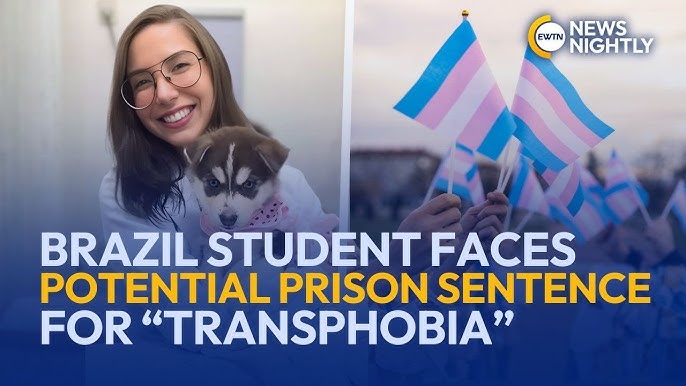
It sounds like something torn from the pages of dystopian fiction: a courtroom, a judge, and a citizen facing years behind bars–not for violence, not for fraud, not for theft, but for stating a belief about biology. Yet this is not fiction. This is happening now to Isadora Borges in Brazil, and if the world shrugs, the precedent could echo across continents like a thunderclap warning too many ignored.
Borges, a 34-year-old veterinary student, stands accused of “transphobia” for social media posts written years ago stating that transgender women are biologically male and that DNA cannot be altered by surgery or hormones. Those statements sparked a complaint from politician Erika Hilton, which in turn triggered a federal criminal case. Prosecutors are pursuing two counts, each carrying potential prison time. Combined, she could lose up to a decade of her life for words typed on a keyboard.
Pause and consider the gravity of that. Ten years. For speech. For opinion. For belief.
According to ADF International, even the judge has acknowledged the posts appear to reflect personal opinion rather than discriminatory intent. Yet the machinery of prosecution grinds forward anyway, fueled by a legal doctrine born when the Supreme Federal Tribunal ruled in 2019 that homophobia and transphobia should be treated as racism under existing law. With that single judicial stroke, categories of speech became potential crimes–without legislators ever voting to create such statutes.
This is how freedom erodes in the modern age: not with tanks in the streets, but with rulings in courtrooms.
The world only started paying attention after Elon Musk amplified discussion of the case online. That fact alone should trouble anyone who believes moral clarity should not depend on algorithmic virality. Why did it take a billionaire’s repost for millions to notice that a woman could be imprisoned for stating a view shared by countless religious believers? Where is the roar of protest from churches, seminaries, and Christian leaders who have long warned that freedom of conscience is fragile?
Silence, in moments like this, is not neutrality. It is surrender.
This is not an isolated tremor. Pastor Douglas Baptista previously faced criminal charges for publishing a book explaining a traditional Christian understanding of sexuality. Those charges were dropped–but the warning shot had already been fired. The message was unmistakable: certain beliefs, if spoken aloud, may draw the attention of prosecutors.
Columnist Mary Anastasia O’Grady of the Wall Street Journal argues that cases like this reveal a judiciary accumulating extraordinary power–effectively shaping law, enforcing it, and judging it. Whether one agrees fully or not, the trajectory is impossible to ignore. When courts become arbiters of acceptable opinion, the boundary between justice and ideology begins to dissolve.
Supporters of such prosecutions often insist they are protecting dignity and preventing harm. But history teaches a sobering truth: once governments claim authority to criminalize viewpoints, they rarely stop with one category. Today it may be gender doctrine. Tomorrow it could be political dissent. Next year it might be religious orthodoxy itself. The principle is what matters. If the state can jail someone for holding the “wrong” belief, no belief is truly safe.
The danger is not disagreement. Free societies thrive on disagreement. The danger is enforced agreement.
Christians, of all people, should recognize the stakes. The Bible contains teachings that have challenged cultural norms for two thousand years. If expressing those teachings can be prosecuted as hate speech, then faith is no longer a protected liberty–it is a regulated activity permitted only when it aligns with prevailing ideology. That is not pluralism. That is permission-based belief.
The deeper issue reaches beyond theology or politics. It is about the architecture of freedom itself. Laws always reflect worldviews. And when a worldview gains legal teeth, it gains the power to punish. Every generation must decide whether the law will guard citizens’ rights to speak–or guard authorities’ power to silence.
If Borges is convicted, the verdict will not simply close one case. It will open a door. And once a government proves it can imprison someone for peaceful expression, that door rarely closes again.
The question confronting the world is stark and unavoidable: will we defend the right to hold unpopular beliefs while we still can–or will we wait until dissent itself is declared illegal?










Leave A Comment
You must be logged in to post a comment.